Can a silent sandwich blade be operated without water in dry cutting?
Check whether this exact model is marked for dry use and review machine and worksite cooling requirements; do not assume a damped core is dry-rated.
Compare damped sandwich and solid steel diamond blade cores across vibration control, heat dissipation, flange mounting, and model-level trial checks.
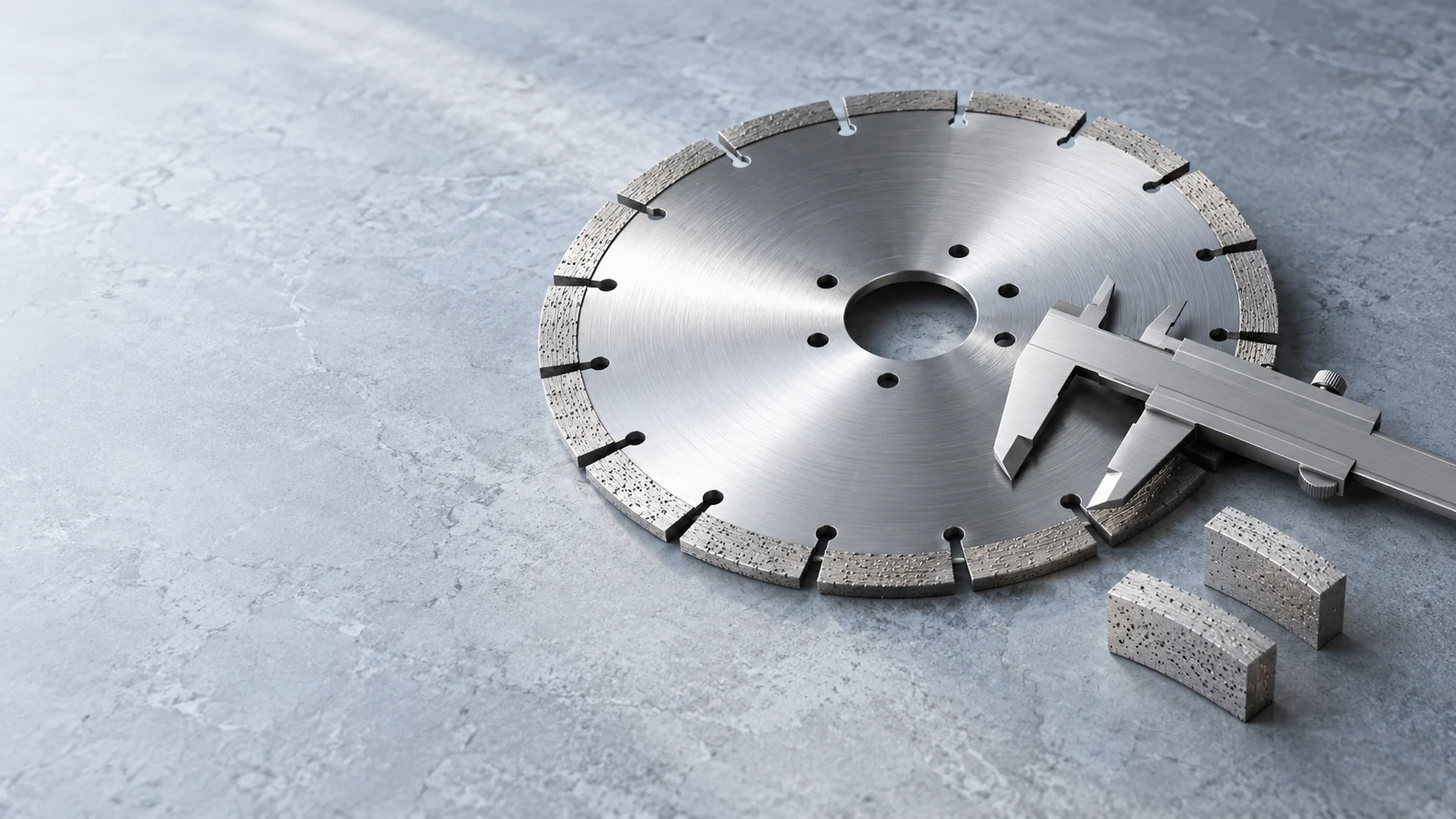
Selection guidance depends on material, machine, and working conditions. Confirm RPM, feed, and cooling against tool markings and machine instructions, then trial the target material.
Content compiled by ADAMA CUT. Compare product specifications with the original Hubei Qianzhao Diamond Tools catalog; verify general process guidance on the actual machine and material. Catalog PDF excerpt
A silent sandwich core refers to a blade core with a damping structure between steel layers. The layer can alter vibration and sound, but does not establish a fixed decibel reduction. Compare the same material, machine, RPM, depth and measurement position, and request model-specific construction data. Related pages: Diamond Blade Slot Geometry: Keyhole, J & U-Slot.
Load response and heat behavior depend on steel, interlayer, joining process and segment design. Check the blade marking for wet or dry use, rated RPM and supplier instructions. No universal temperature ceiling or stiffness percentage follows from the core label alone.
Noise-sensitive indoor work may justify testing a damped core. Heavy cutting, mitering and dry work each require a separate check of rated use. Compare cut quality, measured noise, cooling, machine rigidity and cost for the actual models.
Stop the machine, inspect flange contact surfaces, clamping, spindle and visible blade damage, then measure runout to the equipment procedure. A tap sound alone cannot certify the interlayer. Ask the supplier to assess suspected delamination or cracks before reuse.
| Aspect | Damped core | Solid steel core | Purchase and verification |
|---|---|---|---|
| Construction | Check interlayer material and joining method | Check steel plate and segment joint | Request model-specific construction data |
| Noise | Measure the damped option under matched conditions | Measure the baseline under matched conditions | Record position, background, material and machine |
| Use and maintenance | Check wet/dry marking and interlayer inspection | Check wet/dry marking and core inspection | Compare edges, wear and maker maintenance instructions |
Confirm the application, material, machine, and tool type. Check ratings and operating conditions against the tool markings and machine instructions.
Run a trial under controlled conditions as directed by the manufacturer and inspect the process. Stop the machine if anything is abnormal; troubleshoot according to the instructions before resuming.
Record the trial conditions and acceptance results. Use the technical information agreed by both parties for production parameters.
Thin-segment blade listed for 3-20mm slabs; verify edge quality and wear in a trial cut on the target material.
Precision and wear-focused versions address different goals; verify edge quality and tool life on the target quartz slab.
Self-sharpening diamond matrix with stepped teeth design for hard, dense granite slabs.
Check whether this exact model is marked for dry use and review machine and worksite cooling requirements; do not assume a damped core is dry-rated.
Check flange, clamping, segment wear, blocked slots and core damage. Compare noise and kerf under the same setup; sound alone cannot diagnose the interlayer.
The manufacturer or qualified repairer must assess retipping from the core structure and inspection. A fixed wear percentage or runout number is not an approval.
Compiled by ADAMA CUT. The source catalog and industry references below do not imply endorsement or certification of our products. Follow the specific tool markings and machine instructions, then trial the target material.
Enter blade diameter and spindle RPM to calculate peripheral speed: v = π × D(mm) × n(rpm) / 60000.
Converts only the target you enter; this tool does not recommend a material speed.
-
A calculation is not a safe-speed or fitment approval. Do not exceed the tool-marked maximum RPM or machine limits. Confirm material, cooling, and feed conditions with a trial cut.
View the original Hubei Qianzhao Diamond Tools Co., Ltd. catalog. ADAMA CUT is its overseas business brand; verify specifications against the source page and confirmed documents.