How to Select the Right Saw Blade for Granite, Marble & Sintered Stone
Start with the material, machine, dimensions, and wet/dry rating; confirm with tool markings and a trial cut.
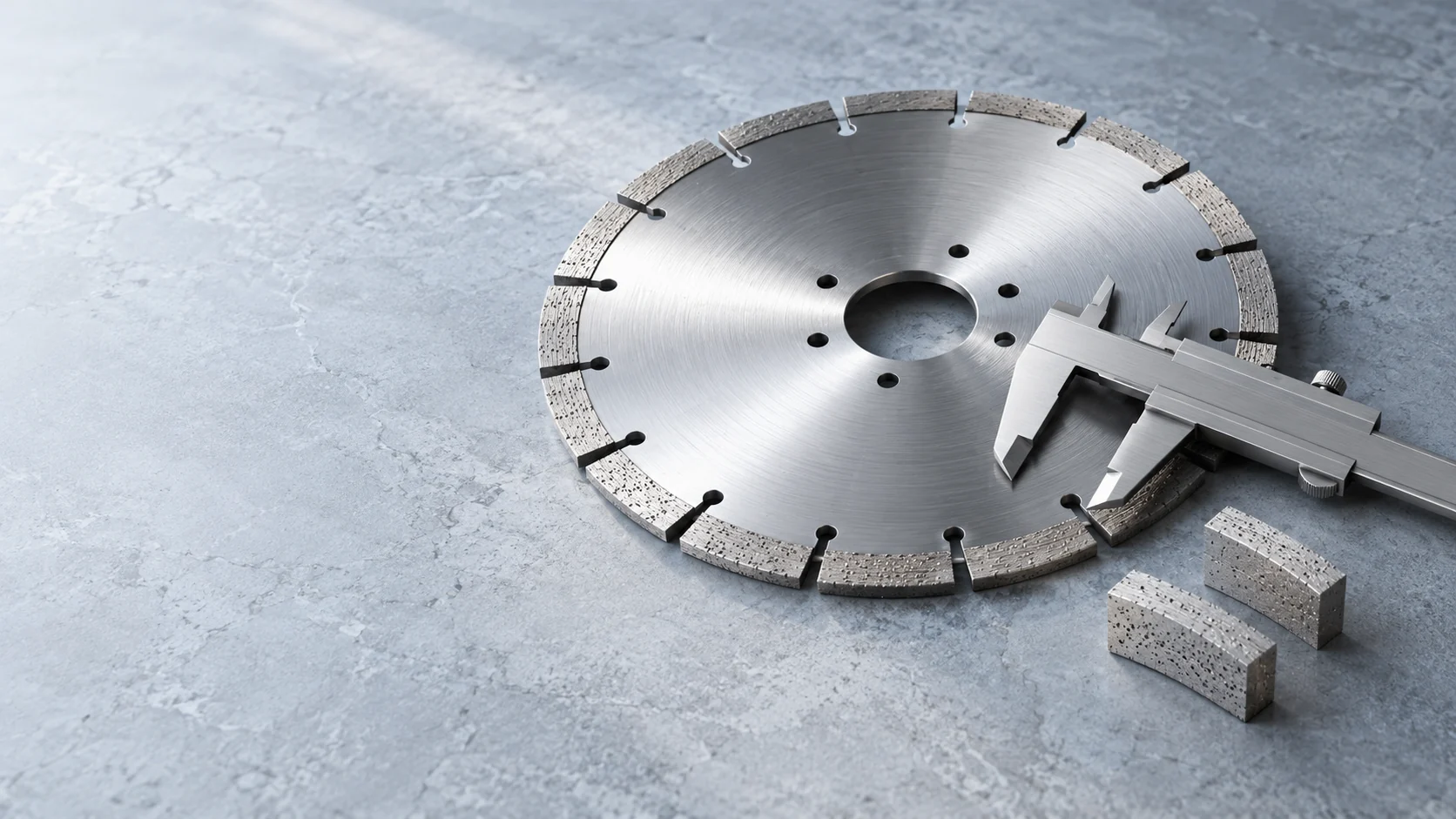
Selection guidance depends on material, machine, and working conditions. Confirm RPM, feed, and cooling against tool markings and machine instructions, then trial the target material.
Content compiled by ADAMA CUT. Compare product specifications with the original Hubei Qianzhao Diamond Tools catalog; verify general process guidance on the actual machine and material. Source catalog PDF
Direct answer
No single bond or slot pattern suits every granite, marble, and sintered slab. Record the exact material and thickness, machine model, diameter and arbor, and water availability. Shortlist compatible blades, then trial-cut the target material.
Bond selection
As diamonds dull, the bond must wear enough to expose fresh cutting points. A less abrasive hard material may call for a bond that renews more readily; an abrasive material may need greater wear resistance. Confirm hardness, abrasiveness, and machine load separately rather than choosing by stone name alone.
Sintered slab and edge quality
Check the slab maker’s tool sheet for that material and thickness. Then verify support, clamping, blade condition, cooling, and feed. If edges chip, record where the defect starts and check each condition in turn; a slot shape or damped core alone cannot guarantee a clean edge.
Trial-cut diagnosis
If the blade glazes or stops cutting, check the segment, water delivery, and machine power. If it wears unusually fast, check material abrasiveness, cooling, and tool specification. Follow the tool and machine manufacturers’ instructions before dressing or changing operating settings.
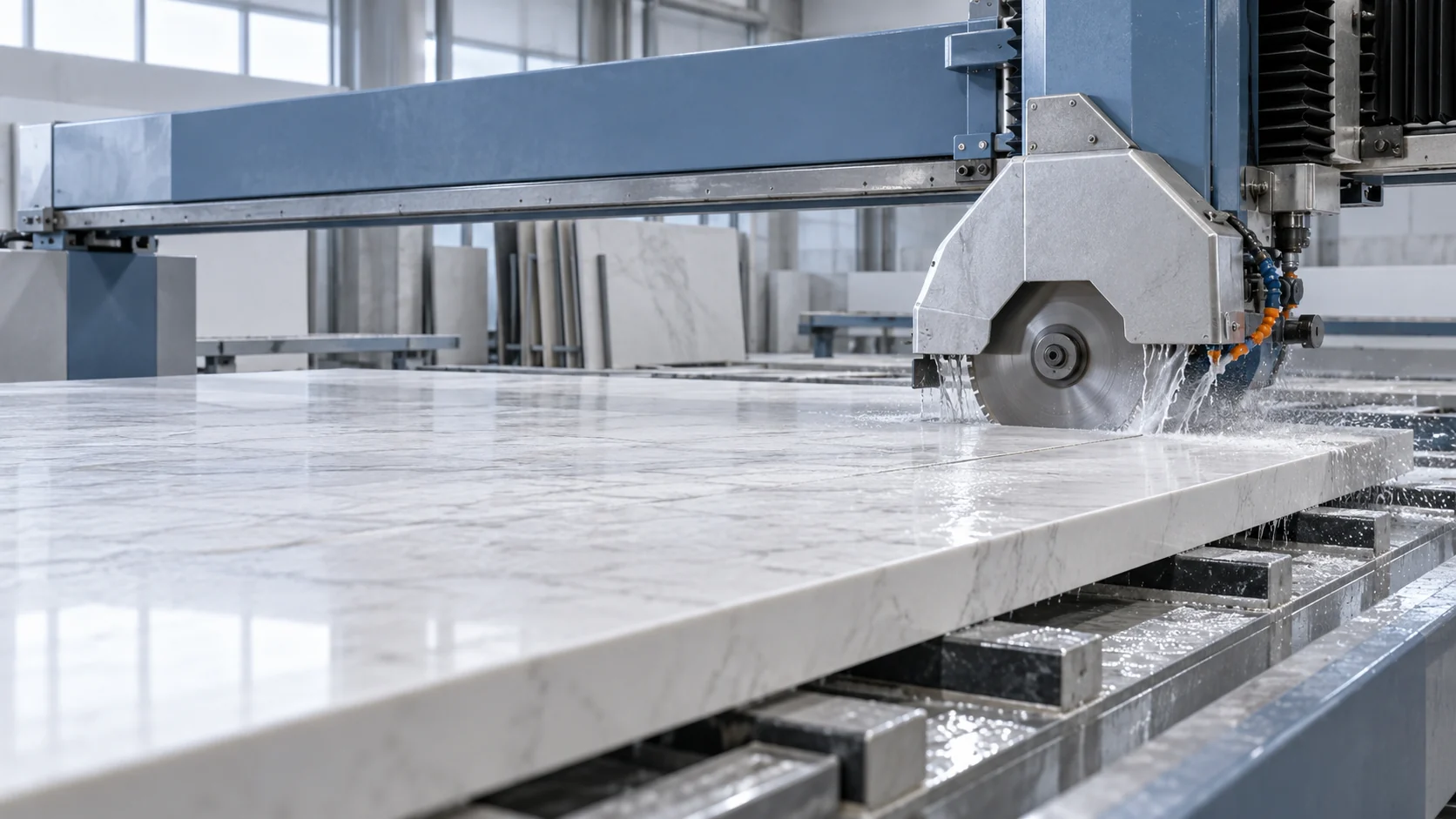
Material and Design Checkpoints
| Material | Characteristics to confirm | Tool and process checks | What to observe |
|---|---|---|---|
| Granite | Variety, mineral content, abrasiveness | Bond, diameter, arbor, water, machine power | Glazing, unusual wear, cut deviation |
| Marble | Variety, veining, fissures, finish target | Kerf width, slab support, cooling, feed | Edge damage, surface marks |
| Sintered stone | Brand, thickness, material maker’s guidance | Specific tool sheet, clamping, markings, water | Entry/exit chips, slab movement |
Compiled by ADAMA CUT. The source catalog and industry references below do not imply endorsement or certification of our products. Follow the specific tool markings and machine instructions, then trial the target material.
Blade Peripheral Speed & RPM Conversion
Enter blade diameter and spindle RPM to calculate peripheral speed: v = π × D(mm) × n(rpm) / 60000.
Converts only the target you enter; this tool does not recommend a material speed.
—
A calculation is not a safe-speed or fitment approval. Do not exceed the tool-marked maximum RPM or machine limits. Confirm material, cooling, and feed conditions with a trial cut.
Need the Complete Technical Spec Sheet Offline?
View the original Hubei Qianzhao Diamond Tools Co., Ltd. catalog. ADAMA CUT is its overseas business brand; verify specifications against the source page and confirmed documents.