Technical Guides
Understand materials, slot profiles and operating parameters. Make informed tooling selections.
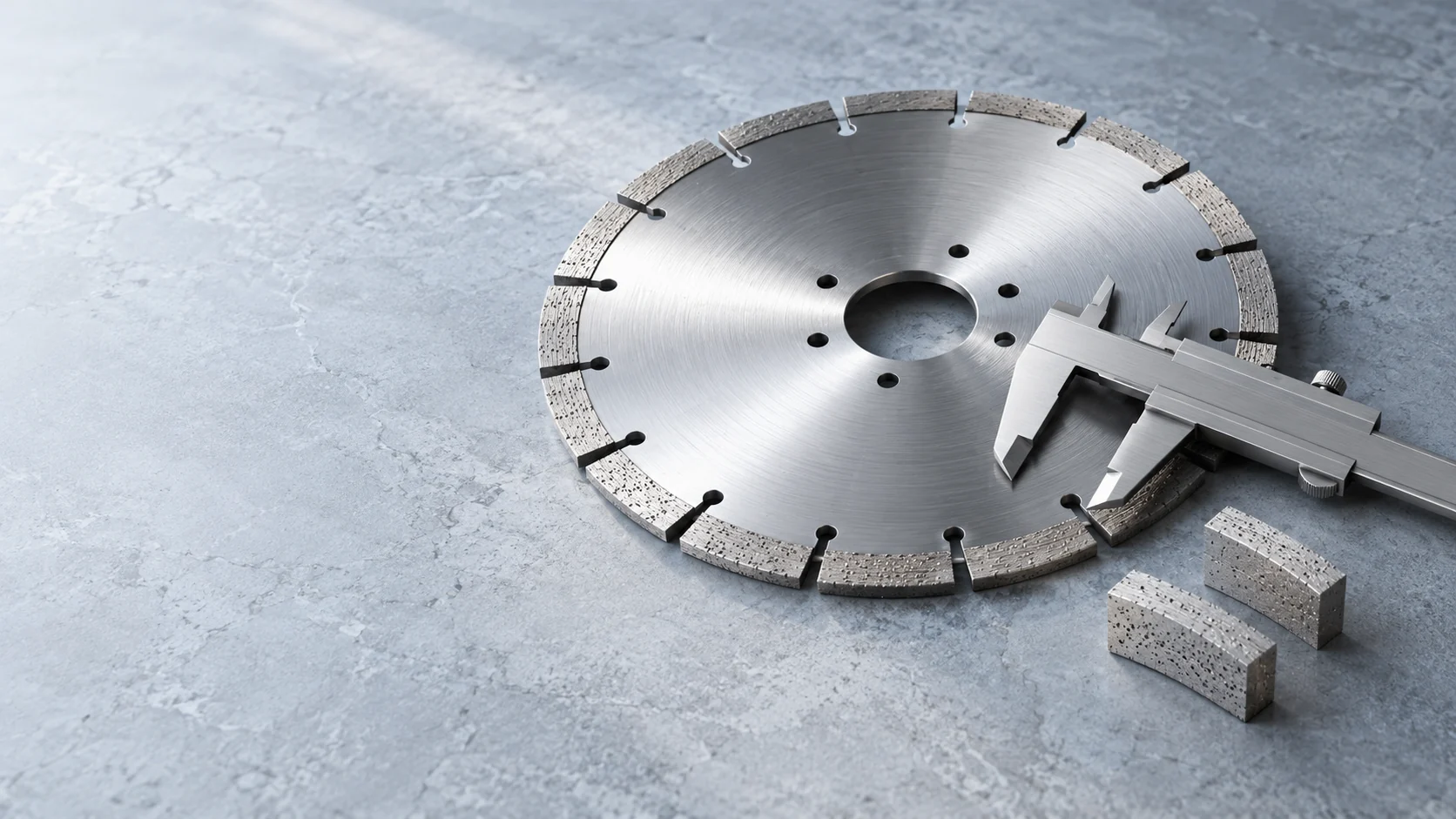
Selection guidance depends on material, machine, and working conditions. Confirm RPM, feed, and cooling against tool markings and machine instructions, then trial the target material.
Content compiled by ADAMA CUT. Compare product specifications with the original Hubei Qianzhao Diamond Tools catalog; verify general process guidance on the actual machine and material. Source catalog PDF
Direct answer
No single bond or slot pattern suits every granite, marble, and sintered slab. Record the exact material and thickness, machine model, diameter and arbor, and water availability. Shortlist compatible blades, then trial-cut the target material.
Bond selection
As diamonds dull, the bond must wear enough to expose fresh cutting points. A less abrasive hard material may call for a bond that renews more readily; an abrasive material may need greater wear resistance. Confirm hardness, abrasiveness, and machine load separately rather than choosing by stone name alone.
Sintered slab and edge quality
Check the slab maker’s tool sheet for that material and thickness. Then verify support, clamping, blade condition, cooling, and feed. If edges chip, record where the defect starts and check each condition in turn; a slot shape or damped core alone cannot guarantee a clean edge.
Trial-cut diagnosis
If the blade glazes or stops cutting, check the segment, water delivery, and machine power. If it wears unusually fast, check material abrasiveness, cooling, and tool specification. Follow the tool and machine manufacturers’ instructions before dressing or changing operating settings.
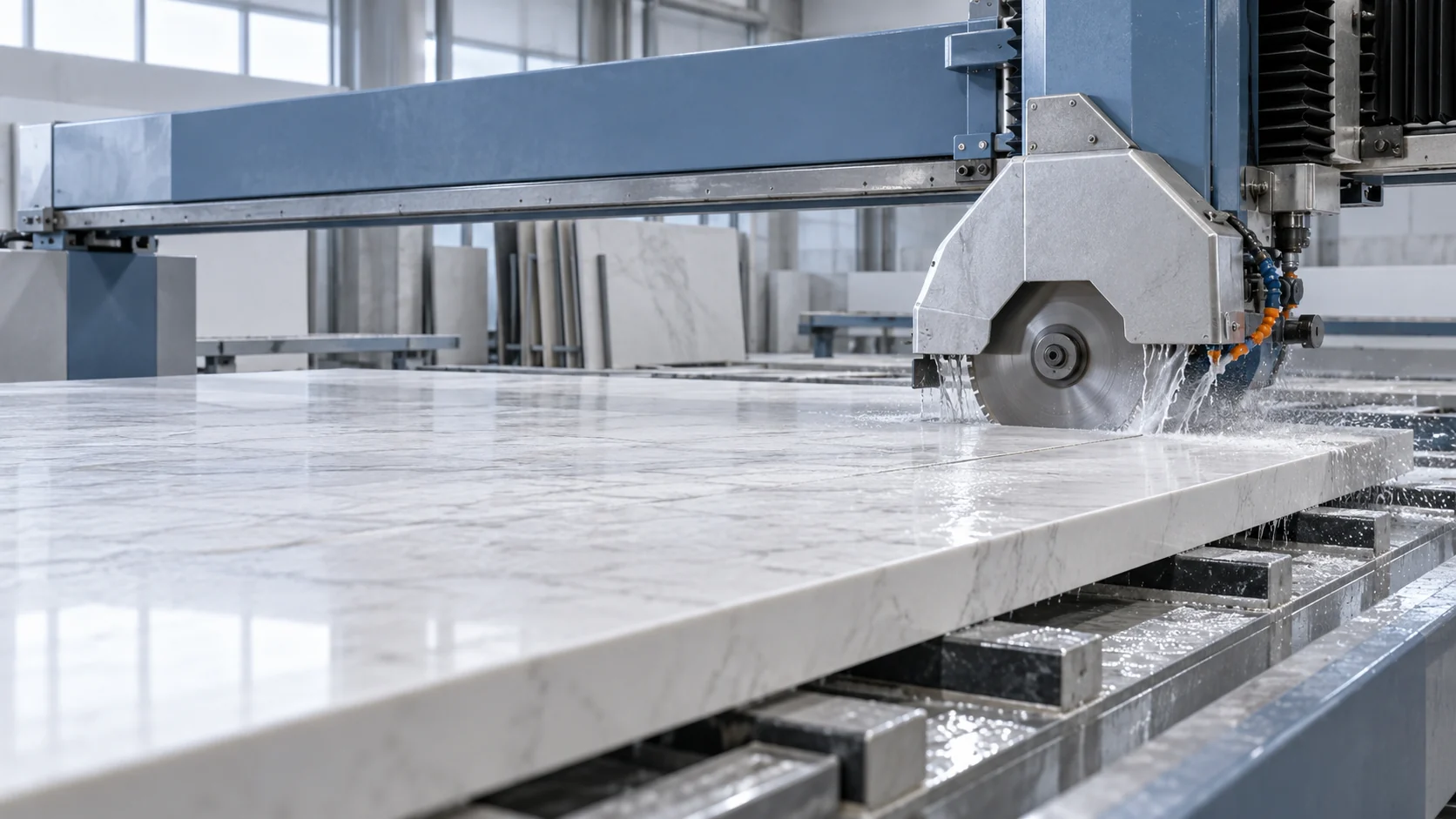
Material and Design Checkpoints
| Material | Characteristics to confirm | Tool and process checks | What to observe |
|---|---|---|---|
| Granite | Variety, mineral content, abrasiveness | Bond, diameter, arbor, water, machine power | Glazing, unusual wear, cut deviation |
| Marble | Variety, veining, fissures, finish target | Kerf width, slab support, cooling, feed | Edge damage, surface marks |
| Sintered stone | Brand, thickness, material maker’s guidance | Specific tool sheet, clamping, markings, water | Entry/exit chips, slab movement |
Compiled by ADAMA CUT. The source catalog and industry references below do not imply endorsement or certification of our products. Follow the specific tool markings and machine instructions, then trial the target material.
Direct distinction
A standard blade commonly uses a single steel core. Some quieter designs use a composite or damped core to change vibration behavior. Interlayer material, construction, and operating limits vary by product; request the exact model specification rather than inferring them from the word “silent.”
When to compare
If site noise or cut stability matters, compare candidate blades on the same machine, material, diameter, segment, speed, and cooling setup. Record measured noise and edge quality. Without like-for-like results, neither a fixed noise reduction nor chip-free cutting can be promised.
Before use
Confirm the blade’s marked maximum speed, material and wet/dry rating, and the fit of the arbor and flanges. Heat and cooling limits of a damped core must come from the specific manufacturer’s instructions; there is no universal temperature limit here.
Troubleshooting
If new noise, wobble, or poor edges appear, stop and inspect the blade, flanges, mounting, spindle, and workpiece support. Then check water delivery and segment specification. Do not continue using a cracked or damaged blade.
Compiled by ADAMA CUT. The source catalog and industry references below do not imply endorsement or certification of our products. Follow the specific tool markings and machine instructions, then trial the target material.
Start with the full design
Straight, J-shaped, keyhole, wide U-shaped slots, and continuous rims are geometry options, not a ranking by material. Check the segment formulation, diameter, kerf, core, material, depth of cut, and cooling together. Slot shape alone does not guarantee debris clearance or fatigue life.
Compare interrupted rims
A wider opening may leave more room for debris; a narrower opening changes how segments enter the cut. Keyhole and curved slots depend on the detailed core design. Slot depth, segment count and size, water direction, and machine condition all matter. Ask for the model drawing or specification.
Compare continuous rims
A continuous rim engages the material differently from a segmented blade, but edge quality still depends on material, grit, tool condition, clamping, and feed. It is not suitable for every tile by definition, and J-slots are not mandatory for sintered slabs.
RFQ and trial
Supply material, thickness, cut depth, machine, diameter and arbor, wet/dry method, and photos of the current cut. Ask the manufacturer to explain each candidate’s limits, then compare edge quality, debris removal, and abnormal tool behavior under matched conditions.
Compiled by ADAMA CUT. The source catalog and industry references below do not imply endorsement or certification of our products. Follow the specific tool markings and machine instructions, then trial the target material.
Direct answer
Where water is available and the pad is rated for wet use, wet polishing is an option. Where water is unavailable, select only a pad explicitly rated for dry use and compatible with the machine. A dry rating does not make every speed or continuous contact safe; do not run a wet-only pad dry.
Wet-use checks
Confirm the pad and machine’s wet rating, that water reaches the contact area, slurry handling, and electrical protection. Water can carry away debris and heat, but gloss, color, and pad wear need a trial on the actual material through the intended sequence.
Dry-use checks
Confirm the pad’s marked maximum speed, machine speed range, contact method, and dust controls. Working silica-containing materials can produce hazardous dust. Select water or local exhaust controls as required by applicable rules and a worksite risk assessment; a dry-rated pad is not evidence of dust safety.
Surface troubleshooting
If heat, discoloration, scratches, or uneven gloss appear, stop and inspect pad condition, grit sequence, pressure, dwell time, and cooling or extraction. Test light-colored material on a sample; resin color is not a universal stain-prevention guarantee.
Compiled by ADAMA CUT. The source catalog and industry references below do not imply endorsement or certification of our products. Follow the specific tool markings and machine instructions, then trial the target material.
Direct answer
A hard, less abrasive surface may be trialed with a bond that exposes fresh diamonds more readily; a more abrasive surface may call for greater bond wear resistance. Concrete strength class is not a direct measure of surface hardness or abrasiveness, so neither a C grade nor a Mohs number selects the shoe by itself.
Collect site conditions
Record surface condition, aggregate, coatings or densifiers, machine model and weight, shoe connection, removal target, and desired finish. If needed, test surface hardness or abrasiveness on site and confirm the method and candidate bonds with the shoe manufacturer.
Trial a small area
Use a representative patch and watch for glazing, excessive metal-bond wear, and whether the next step removes scratches. If cutting stops or wear is rapid, check machine pressure, operation, and surface condition before changing the bond with the manufacturer.
Grit sequence
Start with a grit suited to the current removal task, then refine according to the finish process. Trial results determine whether transitional, resin, or densifying steps are needed. Check that each stage removes the previous scratches instead of treating one grit list as a universal floor recipe.
Compiled by ADAMA CUT. The source catalog and industry references below do not imply endorsement or certification of our products. Follow the specific tool markings and machine instructions, then trial the target material.
Material and task
Name the exact material, brand or sample, thickness, process, and edge or finish target. If a current tool has a repeatable problem, include its model, photos, and operating conditions. “Cutting stone” alone is not enough to confirm a tool.
Machine and fit
Give the machine make and model, working spindle range, diameter limit, arbor, flange or drive-pin pattern, and grinding-shoe connection where applicable. Check the candidate tool’s marked maximum speed, dimensions, and mounting against machine documents.
Worksite conditions
State wet or dry operation, how water reaches the contact area, debris and dust controls, and current feed and depth-of-cut settings with their adjustable range. Confirm speed, feed, and water for the specific tool and material rather than deriving them from a catalog category.
Quotation and validation
Add quantity, packaging, destination, and sample needs. Ask the supplier to confirm model, dimension drawing, operating limits, price, and lead time. The catalog shows categories and some specifications; unlisted or custom parameters require final technical confirmation and a written quotation.
Compiled by ADAMA CUT. The source catalog and industry references below do not imply endorsement or certification of our products. Follow the specific tool markings and machine instructions, then trial the target material.
Blade Peripheral Speed & RPM Conversion
Enter blade diameter and spindle RPM to calculate peripheral speed: v = π × D(mm) × n(rpm) / 60000.
Converts only the target you enter; this tool does not recommend a material speed.
—
A calculation is not a safe-speed or fitment approval. Do not exceed the tool-marked maximum RPM or machine limits. Confirm material, cooling, and feed conditions with a trial cut.
Need the Complete Technical Spec Sheet Offline?
View the original Hubei Qianzhao Diamond Tools Co., Ltd. catalog. ADAMA CUT is its overseas business brand; verify specifications against the source page and confirmed documents.