Concrete Floor Grinding: Matching Bond Hardness & Grits to Concrete Condition
Assess floor hardness and abrasiveness separately, then trial the bond and grit against cutting and wear.
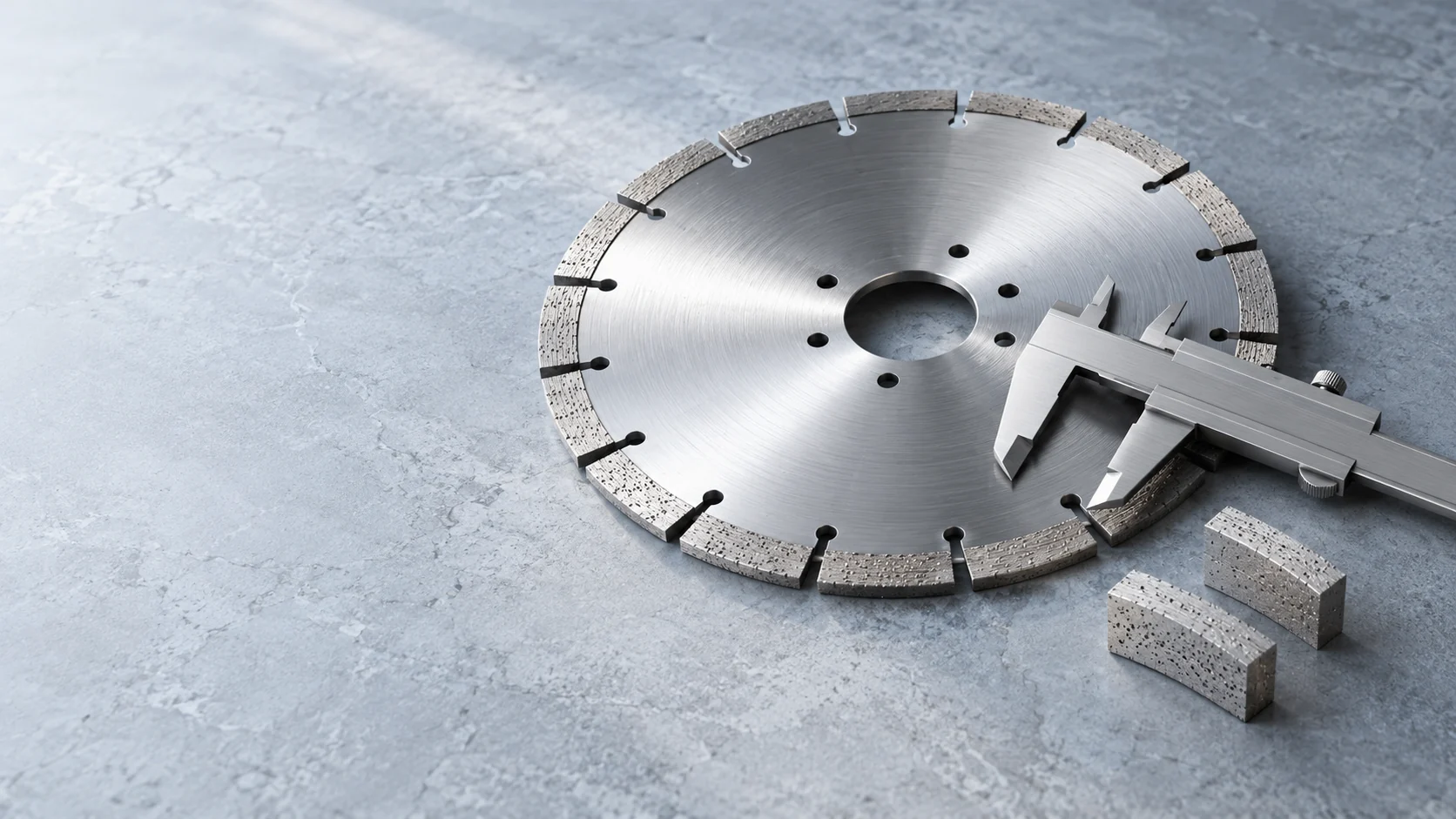
Selection guidance depends on material, machine, and working conditions. Confirm RPM, feed, and cooling against tool markings and machine instructions, then trial the target material.
Content compiled by ADAMA CUT. Compare product specifications with the original Hubei Qianzhao Diamond Tools catalog; verify general process guidance on the actual machine and material. Source catalog PDF
Direct answer
A hard, less abrasive surface may be trialed with a bond that exposes fresh diamonds more readily; a more abrasive surface may call for greater bond wear resistance. Concrete strength class is not a direct measure of surface hardness or abrasiveness, so neither a C grade nor a Mohs number selects the shoe by itself.
Collect site conditions
Record surface condition, aggregate, coatings or densifiers, machine model and weight, shoe connection, removal target, and desired finish. If needed, test surface hardness or abrasiveness on site and confirm the method and candidate bonds with the shoe manufacturer.
Trial a small area
Use a representative patch and watch for glazing, excessive metal-bond wear, and whether the next step removes scratches. If cutting stops or wear is rapid, check machine pressure, operation, and surface condition before changing the bond with the manufacturer.
Grit sequence
Start with a grit suited to the current removal task, then refine according to the finish process. Trial results determine whether transitional, resin, or densifying steps are needed. Check that each stage removes the previous scratches instead of treating one grit list as a universal floor recipe.
Compiled by ADAMA CUT. The source catalog and industry references below do not imply endorsement or certification of our products. Follow the specific tool markings and machine instructions, then trial the target material.
Blade Peripheral Speed & RPM Conversion
Enter blade diameter and spindle RPM to calculate peripheral speed: v = π × D(mm) × n(rpm) / 60000.
Converts only the target you enter; this tool does not recommend a material speed.
—
A calculation is not a safe-speed or fitment approval. Do not exceed the tool-marked maximum RPM or machine limits. Confirm material, cooling, and feed conditions with a trial cut.
Need the Complete Technical Spec Sheet Offline?
View the original Hubei Qianzhao Diamond Tools Co., Ltd. catalog. ADAMA CUT is its overseas business brand; verify specifications against the source page and confirmed documents.