02 / MATERIAL & PROCESS

Manufacturing & QC

From diamond grit and matrix bonds to forming, sintering, welding and inspection. Explore the essential process controls.

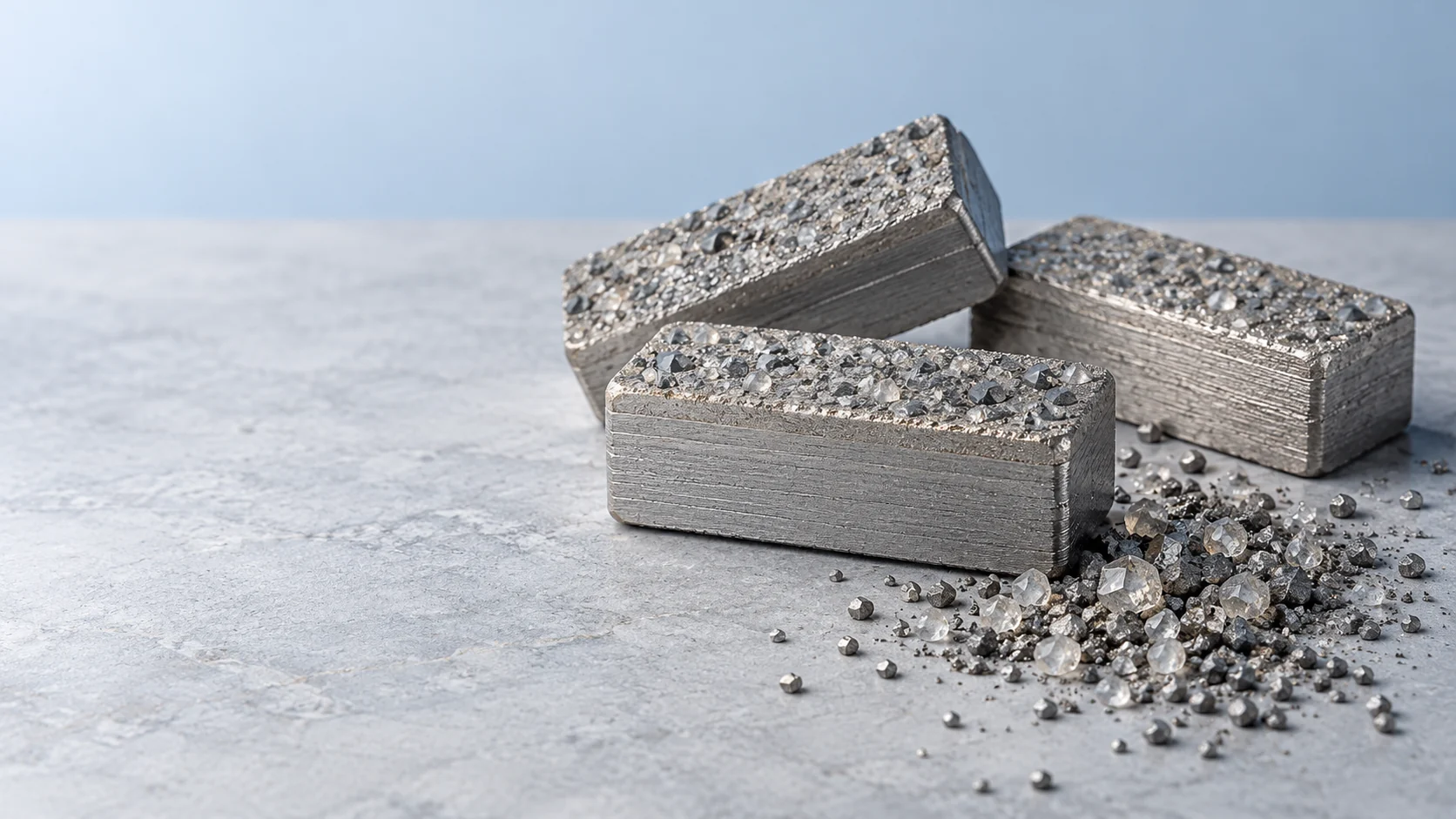
Material concept of diamond grit and metal-bond segments
Material concept of diamond grit and metal-bond segmentsCONCEPT VISUAL

What Manufacturing Stages and Quality Controls Govern Diamond Tools?

Diamond Tool Manufacturing Quality: Process control spans grit and bond batching, cold pressing, hot-press sintering, induction brazing, and runout inspection. Verify segment bonding and batch inspection records against each order specification.

01

Raw Material Testing & Diamond Grading

Crushing strength, thermal impact toughness (TI/TTI) and powder purity assays

For procurement, verify diamond grit and grade, bond powder composition, and incoming inspection records. Sampling and acceptance criteria depend on the supplied batch.

Quality checkpoints:
Diamond crystal strength and grading method
Thermal stability criteria by specification
Metal powder particle-size records if applicable

Equipment examples to evaluate: Static Crystal Toughness Tester / Laser Particle Analyzer

02

Granulation & Precision Cold Pressing

Review blending uniformity, piece weight, and layer alignment during cold pressing

Powder blending and green-segment pressing affect layer alignment and piece weight. Review equipment, tolerance, and sampling records by product specification.

Quality checkpoints:
Green compact density by specification
Piece-weight tolerance by specification
Layer alignment if applicable

Equipment examples to specify: Multi-station CNC Automated Cold Press / Precision Microbalance

03

Sintering Process & Record Review

Confirm sintering temperature, pressure profile, and segment density by formula

Sintering conditions affect bond performance. Buyers may request temperature, pressure, and hardness records for the supplied formula; inspect actual equipment and batch records.

Quality checkpoints:
Temperature record by formula
Pressure profile by formula
Hardness sampling by order

Equipment examples to verify: Vacuum High-Frequency Sintering Machine / Rockwell Hardness Tester

04

High-Frequency Induction Brazing & Laser Welding

Confirm welding method, joint strength, and inspection method by product

Brazing and laser welding depend on tool design and application. Review joint method, strength testing, and applicable safety standards in product documents.

Quality checkpoints:
Segment alignment by drawing
Welding temperature process record if applicable
Joint-strength test by product specification

Equipment examples to review: brazing, welding, and shear-test systems

05

Core Tensioning, Flattening & Runout Inspection

Manual tension leveling by master smiths plus laser dial indicators with runout limits to be confirmed by specification

Blade stability at high peripheral speeds hinges on uniform internal core tension. Core tension, axial runout, and radial runout are procurement inspection points. Verify test method, sampling, and acceptance limits in the order documents.

Quality checkpoints:
Core flatness by drawing
Axial and radial runout by specification
Bore and pin-hole dimensions by drawing

Equipment examples to inspect: runout gauge / tension tester

06

Edge Dressing, Rust Prevention & Export Packaging

Confirm dressing, rust prevention, and shipping packaging per order

Inspect dressing, rust prevention, and carton construction per product and shipping mode. Check appearance, dimensions, and fitment before a trial cut.

Quality checkpoints:
Dressing depth by specification
Rust protection method by shipping mode
Packaging compression or drop test if required

Dressing and packaging method specified per order

Incoming, In-Process & Outgoing Inspection Checklist

Factory QC Checklist: Verify test methods, sampling ratios, and acceptance limits in the diamond tool purchase specification.

Review StageInspection ItemEvidence & Review MethodAcceptance Criteria
Incoming QC (IQC)Diamond Crystal Crushing StrengthSingle-grain compression tester (sampling per agreement)Confirm method, sampling, and limit in the order documents
Incoming QC (IQC)75Cr1 Alloy Steel Core FlatnessGranite surface plate with micrometer dial indicatorConfirm method, sampling, and limit in the order documents
In-Process QC (IPQC)Sintered Segment Hardness & TRSMetallographic cross-section Vickers / 3-point bend testConfirm method, sampling, and limit in the order documents
In-Process QC (IPQC)Brazed / Welded Seam Shear StrengthHydraulic torque shear push testerConfirm method, sampling, and limit in the order documents
Pre-order reviewAxial Face and Radial Runout RequirementsReview order tolerances and available inspection recordsConfirm against the order specification and available records
Pre-order reviewTool-rated Maximum RPM, Rim Speed, and Safety MarkingsReview tool markings, machine instructions, and available test recordsFollow tool and machine ratings; agree on test evidence in the order

International Safety Markings & Dust Control Checkpoints

Key safety markings and wet-cutting dust control checkpoints to specify and verify in European and North American procurement

EN 13236 / SAFETY OF SUPERABRASIVE TOOLS

European EN 13236 Safety Requirements & Core Markings

When sourcing diamond blades and cup wheels for European markets, check four points against the product construction and order specification. First, agree on joint-strength test methods, sampling rates, and acceptance limits for brazed or welded segments. Second, verify the tool-marked maximum operating speed or RPM against machine limits. Third, check directional rotation, wet or dry use, and safety markings. Fourth, review axial and radial runout batch records whenever tolerance limits are specified.

OSHA 1926.1153 / RESPIRABLE CRYSTALLINE SILICA

US OSHA 1926.1153 Silica Dust Control & Wet-Cutting Fit

To support North American respirable crystalline silica (RCS) dust controls, pair wet-cutting tools with continuous water feed or shroud extraction. First, select U-gullet or water-slot geometries that guide coolant into the cutting zone. Second, flush abrasive slurry steadily from the kerf to reduce bond undercutting. Third, never run wet-only blades dry, which causes thermal core overheating and loss of tension.

Batch Traceability & Heavy Export Packaging

1. Laser Batch Codes

Specify batch marking, formula IDs, and sample retention in the order, then verify against actual batch records.

2. Anti-Corrosion Treatment

Confirm rust prevention for the transport environment and product material; inspect surface cleanliness and moisture protection before shipment.

3. Export Palletization

Confirm carton, corner protection, and pallet specifications for product size, weight, and destination.