01Selection
How to Select the Right Saw Blade for Granite, Marble & Sintered Stone
Start with the material, machine, dimensions, and wet/dry rating; confirm with tool markings and a trial cut.
Understand metallurgical melting vs. mechanical encapsulation; choose by thermal limits, dry/wet, and workpiece material.
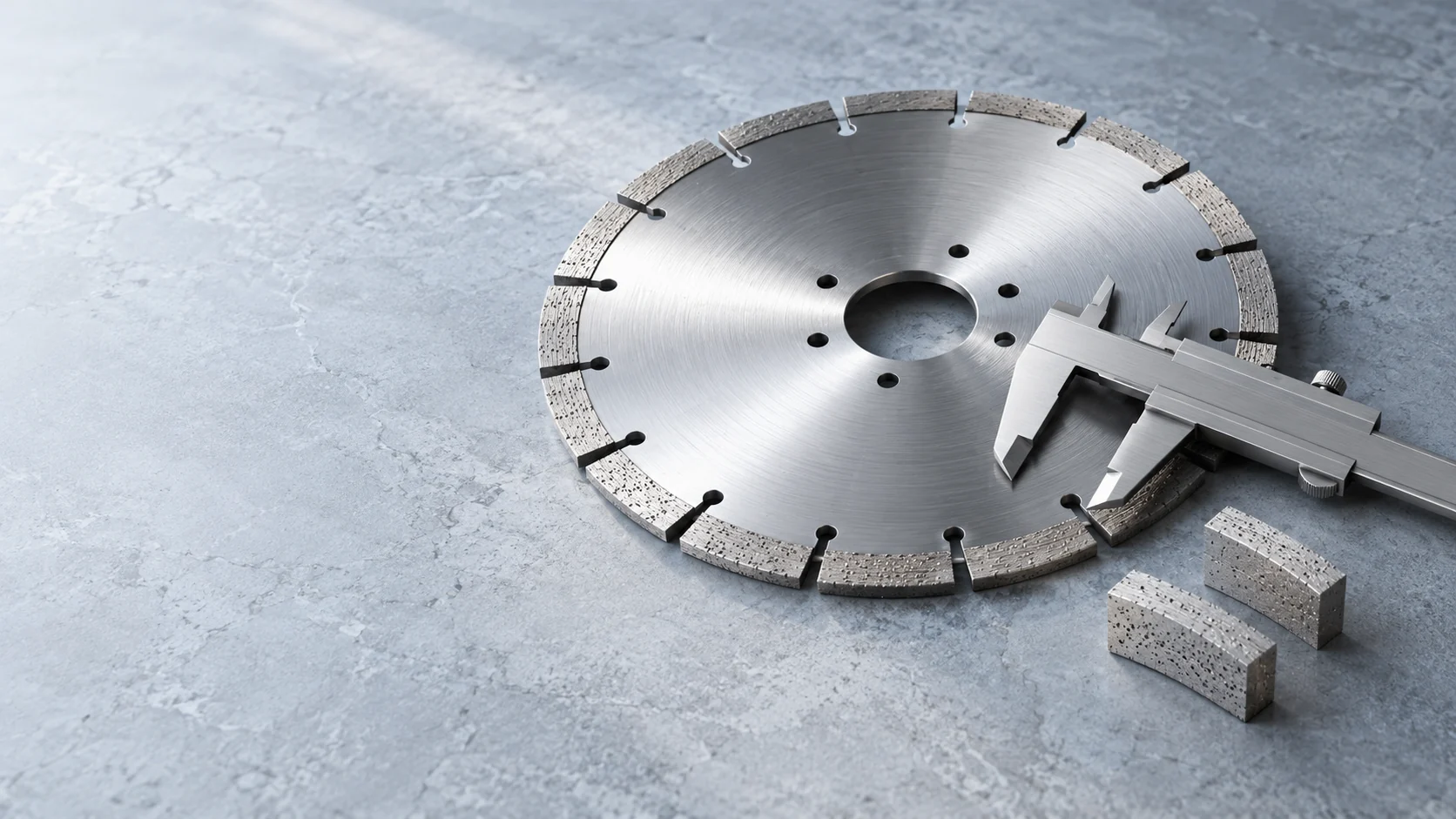
Selection guidance depends on material, machine, and working conditions. Confirm RPM, feed, and cooling against tool markings and machine instructions, then trial the target material.
Content compiled by ADAMA CUT. Compare product specifications with the original Hubei Qianzhao Diamond Tools catalog; verify general process guidance on the actual machine and material. Source catalog PDF
Vacuum brazing fuses diamond crystals to the steel substrate via high-temperature chemical reactions with active braze alloys in a vacuum furnace, exposing 70–80% of diamond crystal height with exceptional bond strength for heavy-duty dry cutting. Electroplating mechanically locks diamonds under electro-deposited nickel at room temperature, offering high dimensional precision but limited thermal tolerance (under 300°C).
Electroplated tools rely on mechanical entrapment where nickel plating must cover 60–70% of the crystal to hold it; high thermal loads soften the nickel matrix, causing premature pull-out. Vacuum brazing diffuses titanium/nickel/chromium brazing alloys at 900–1000°C, forming chemical carbides with diamond facets. High crystal exposure and wide gullets prevent swarf clogging in dry operations.
Cast iron foundry deburring, emergency rescue multipurpose cutting, dry sintered stone core drilling, mortar joint raking, and composite FRP routing require vacuum brazed tools. Optical glass profiling, delicate marble relief carving, precision grinding pins, and reusable tool body replating require electroplated tools.
While electroplated tools feature lower initial purchase costs, their single-layer mechanical entrapment results in rapid wear under abrasive loads. Vacuum brazed tools yield 3 to 5 times greater linear meters or hole counts in dry abrasive cutting, substantially lowering overall tooling changeover and labor downtime costs.
| Evaluation Dimension | Vacuum Brazed Technology | Electroplated Technology | Engineering Decision Advice |
|---|---|---|---|
| Bonding Mechanism & Strength | High-temp chemical metallurgy forming carbide bonds; zero pull-out | Room-temp electro-deposited nickel mechanical trap; heats soften matrix | Choose brazed for high-impact dry cutting; choose plated for ultra-low load finishing |
| Diamond Exposure Ratio | Up to 70%–80% crystal height exposed; deep gullets | Only 30%–40% exposed (higher exposure causes diamond pull-out) | Brazed tools cut faster without loading; plated tools offer smoother surface finish |
| Thermal Limit & Coolant Mode | Tolerates 800°C–900°C; outstanding dry performance | Degrades above 300°C; requires continuous flood coolant | Jobsite dry cutting or foundry work must use brazed tools to prevent immediate failure |
| Typical Applications | Cast iron deburring, rescue rescue saws, dry sintered core drilling | Glass edging, intricate stone carving burrs, wafer dicing, custom profiles | Decide by material ductility vs brittleness, and verify worksite water availability |
Compiled by ADAMA CUT. The source catalog and industry references below do not imply endorsement or certification of our products. Follow the specific tool markings and machine instructions, then trial the target material.
Enter blade diameter and spindle RPM to calculate peripheral speed: v = π × D(mm) × n(rpm) / 60000.
Converts only the target you enter; this tool does not recommend a material speed.
—
A calculation is not a safe-speed or fitment approval. Do not exceed the tool-marked maximum RPM or machine limits. Confirm material, cooling, and feed conditions with a trial cut.
View the original Hubei Qianzhao Diamond Tools Co., Ltd. catalog. ADAMA CUT is its overseas business brand; verify specifications against the source page and confirmed documents.