01 / THE TOOL COLLECTION

Grinding Tools

Explore diamond tooling by product, material and application. Confirm standard specifications and customization in the catalog.

Matching tools 3 / 23
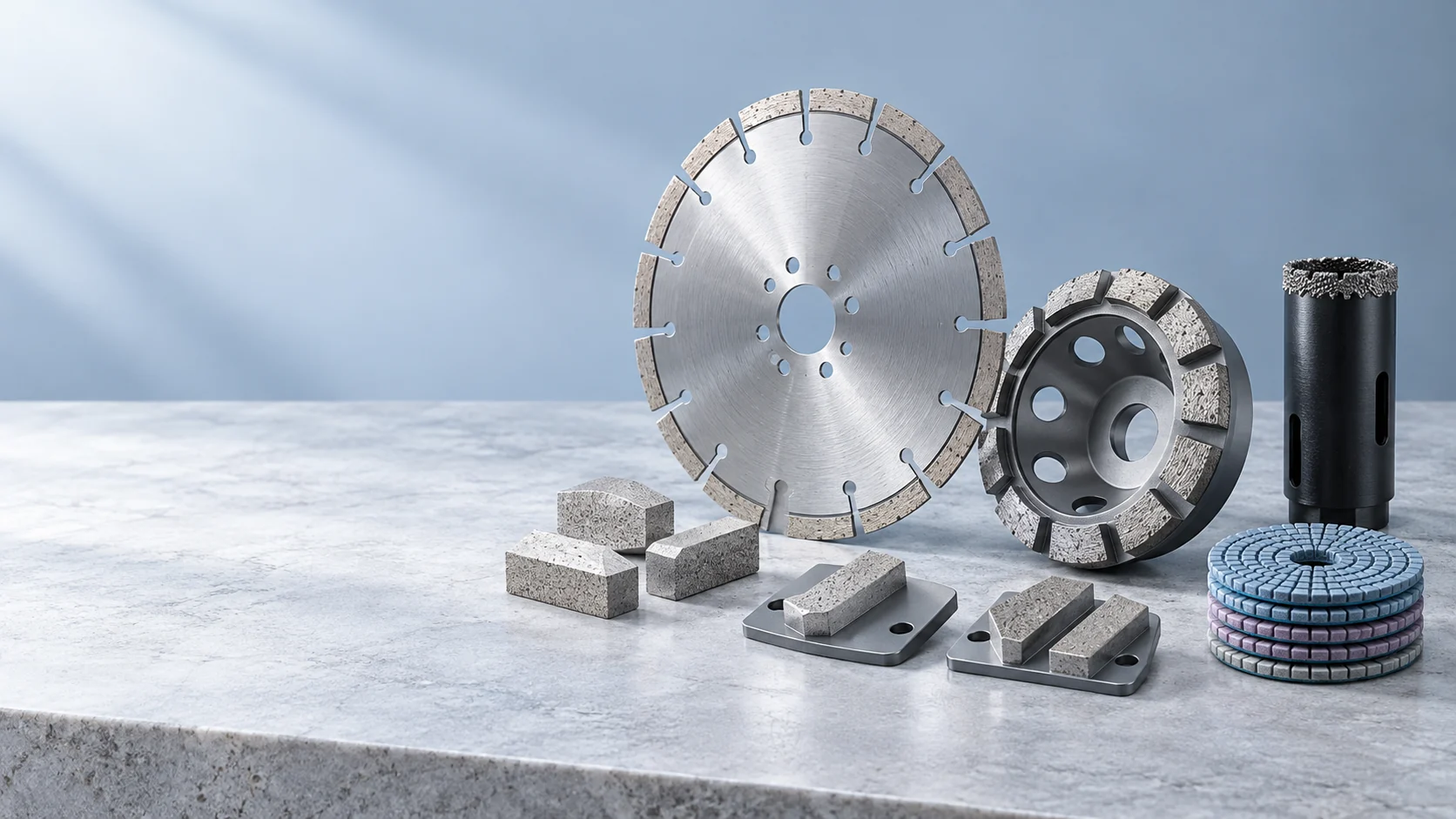
Concept still life of cutting, grinding and polishing tools
Concept still life of cutting, grinding and polishing toolsCONCEPT VISUAL

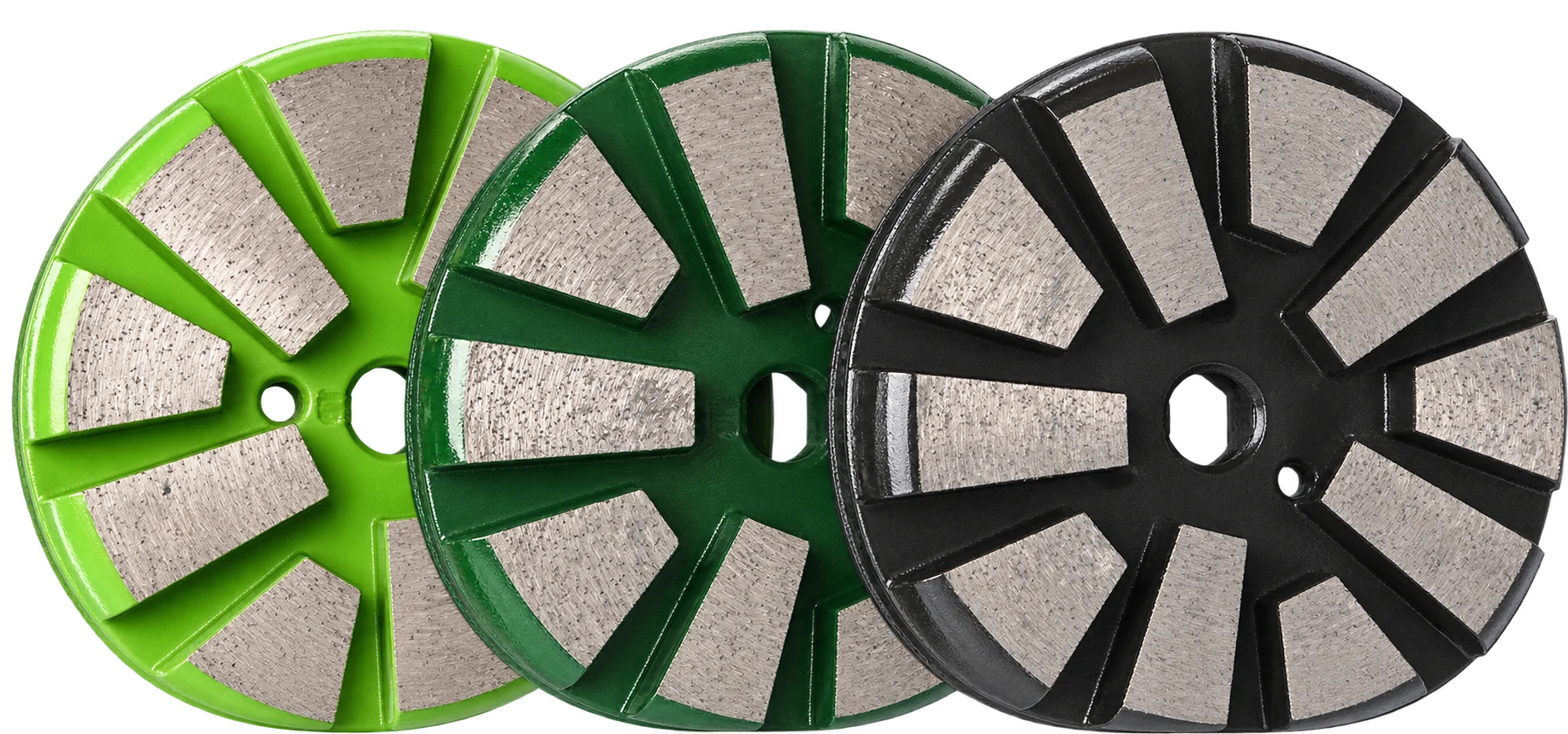
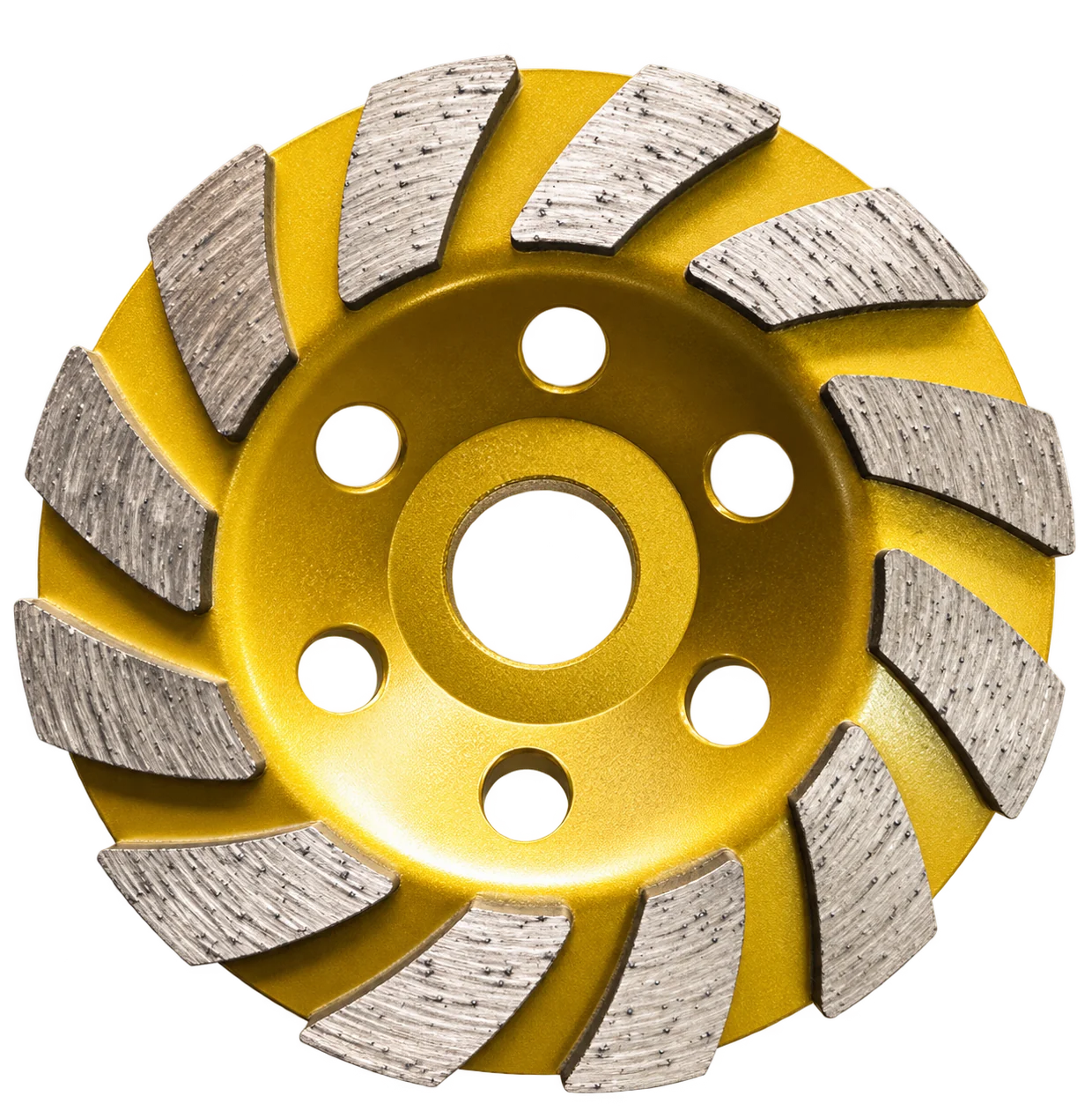
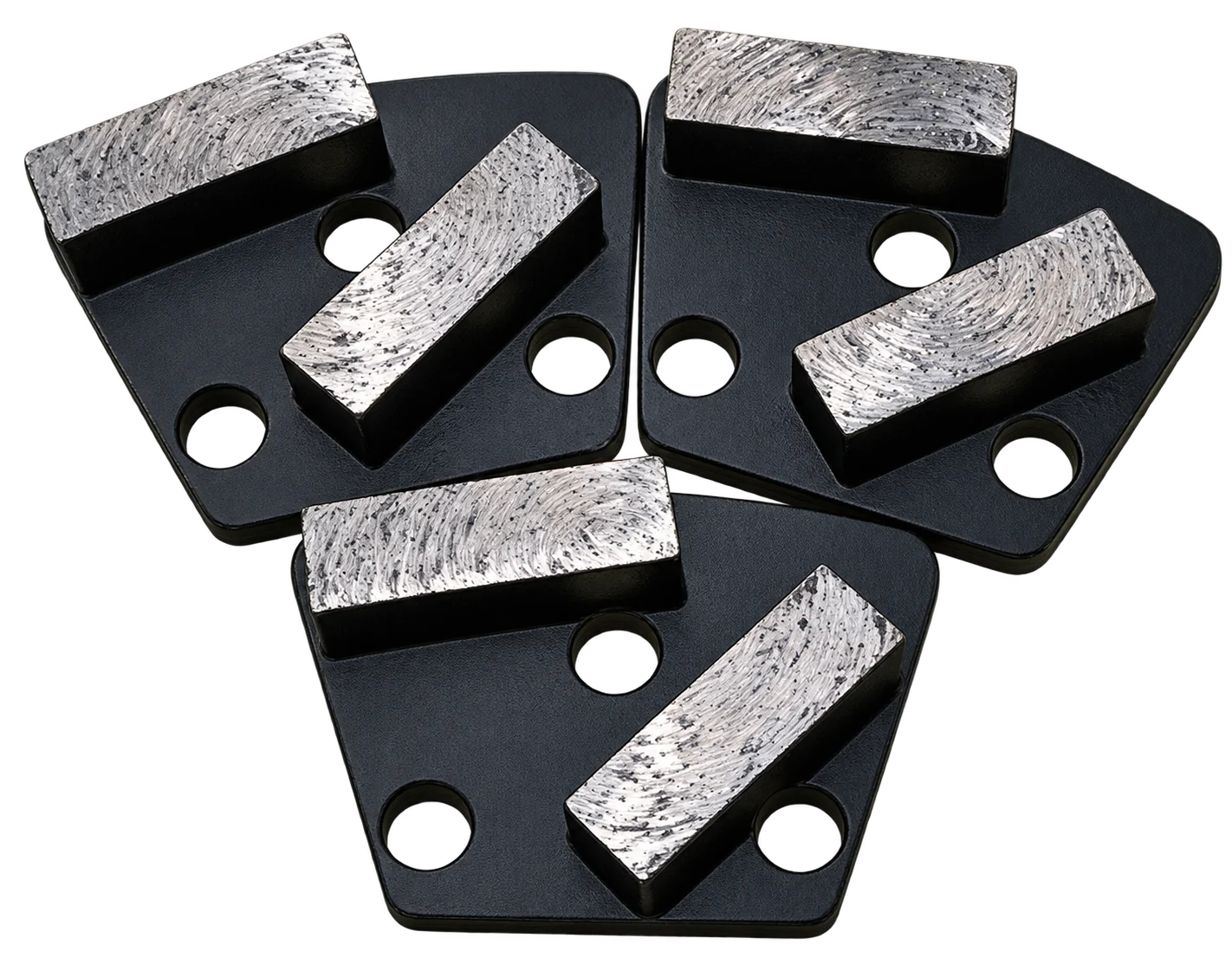
Concrete grinding tooling: Designed for surface preparation, leveling, mastic coating removal, and floor profiling. Available with Redi-lock, trapezoid 3-hole, and threaded mountings across Extra Soft to Extra Hard metal bonds.

Not sure which tool fits your job? Try the 3-Step Wizard

Filter preliminary candidates by material and machine type, then confirm fitment and job conditions

Diamond Tool Models & Specifications

Formulated to match workpiece hardness, machine power and operating linear speed.

Material:
Cooling:
BUYING GUIDE · TECHNICAL SELECTION

How Do You Match Grinding Shoe Bond Hardness to Concrete Compressive Strength?

The Golden Rule of floor grinding: match opposite bonds to concrete hardness. Soft concrete requires hard bonds; hard concrete requires soft bonds.

Concrete Grinding Bond Hardness and Grit Progression Table

Bond Matrix TypeConcrete Substrate TypeGrit Stage & ProfileMachine Pressure & Application
Extra Soft / Soft BondHard-troweled, densified C40+ concreteQZ-18 16# / 30# Redi-lock double barFast opening of non-porous floor, prevents glazing
Medium BondStandard commercial C25 to C35 concreteQZ-18 30# / 60# trapezoid shoeBalanced cutting rate and service life for general prep
Hard / Extra Hard BondSoft, abrasive C15 to C25, rain-damaged slabQZ-18 30# / 80# high-durability alloyResists premature wear from abrasive sand slurry

Key Floor Grinding Terminology Explained

Concrete Surface Profile (CSP)

The standardized metric (CSP 1 to 9) developed by ICRI to specify concrete roughness. CSP 2-3 (light abrasive finish for epoxy primers) is typically achieved with 30# to 60# metal bond shoes.

Glazing Over

When the grinding shoe bond does not wear away on a hard slab, causing diamond points to polish flush with the metal base. The machine slides with zero dust generation and high motor temperature.

Floor Grinding Field Operation FAQs

Q1.Why are my diamond shoes wearing out after only 200 square meters?

Premature wear occurs when soft or medium bond shoes are used on soft, abrasive concrete. The loose quartz sand slurry continuously grinds away the matrix. Switch to a Hard or Extra Hard bond shoe to preserve tool life.

Q2.Should I grind concrete floors wet or dry?

Dry grinding with an industrial HEPA dust collector is standard for testing slab hardness, removing coatings, and meeting OSHA silica regulations. Wet grinding is faster on extremely hard slabs but requires continuous slurry vacuuming.

Q3.How do you dress a glazed diamond grinding shoe or blade that has stopped cutting?

To restore cutting action: Run the tool at reduced speed across a medium-abrasive refractory dressing brick, soft sandstone, or loose damp silica sand for 15 to 30 seconds. The abrasive grains erode the glazed metal bond and expose fresh sharp diamond crystals.