Concrete Road Sawing & Floor Grinding Prep
Road sawing, expansion jointing, and multi-stage planetary floor grinding; confirm blade welding process per order.
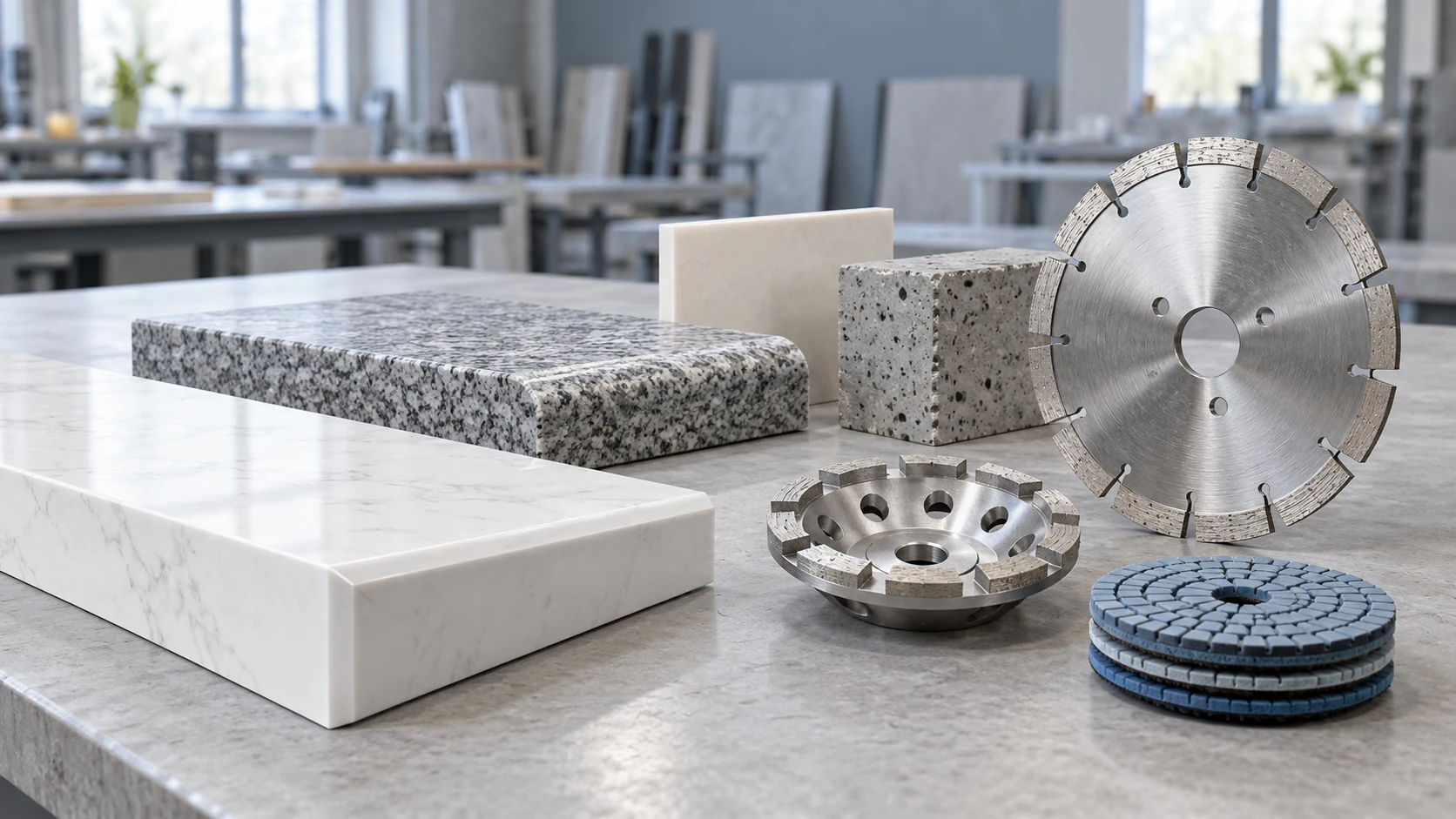
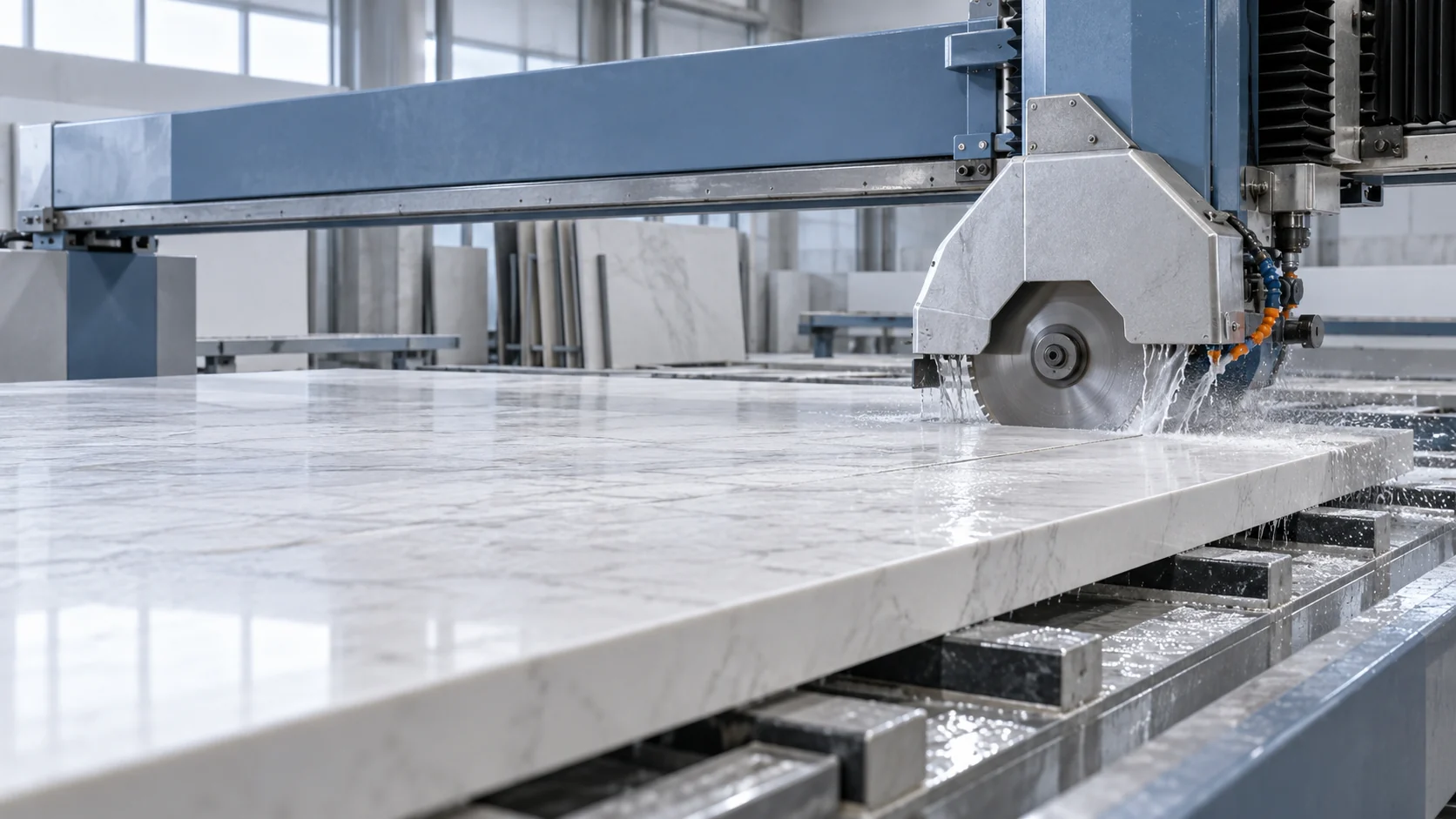
Sintered Stone & Quartz Countertop Fabrication
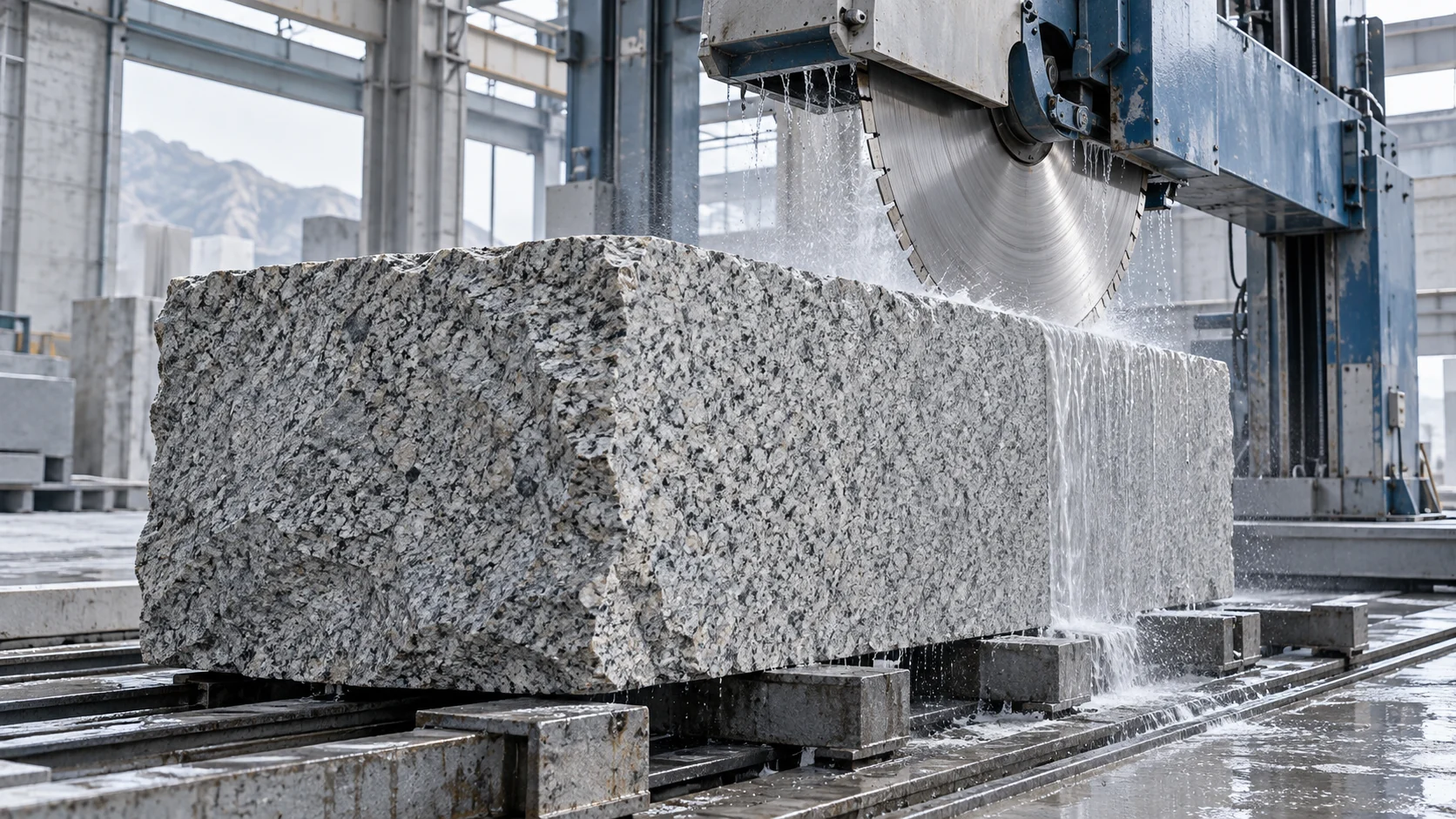
Granite & Marble Slabbing & Block Extraction
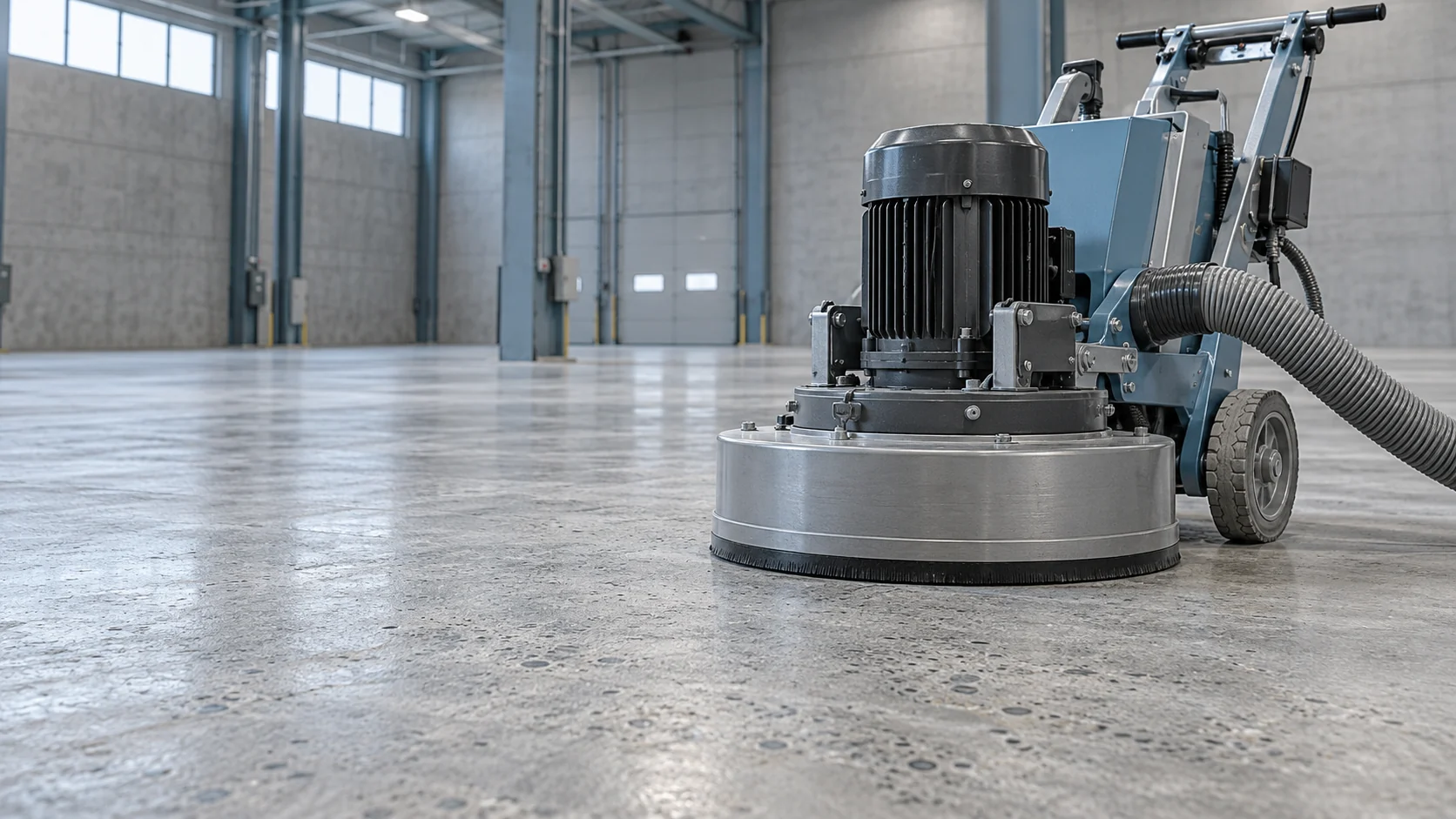
Concrete Road Sawing & Floor Grinding Prep
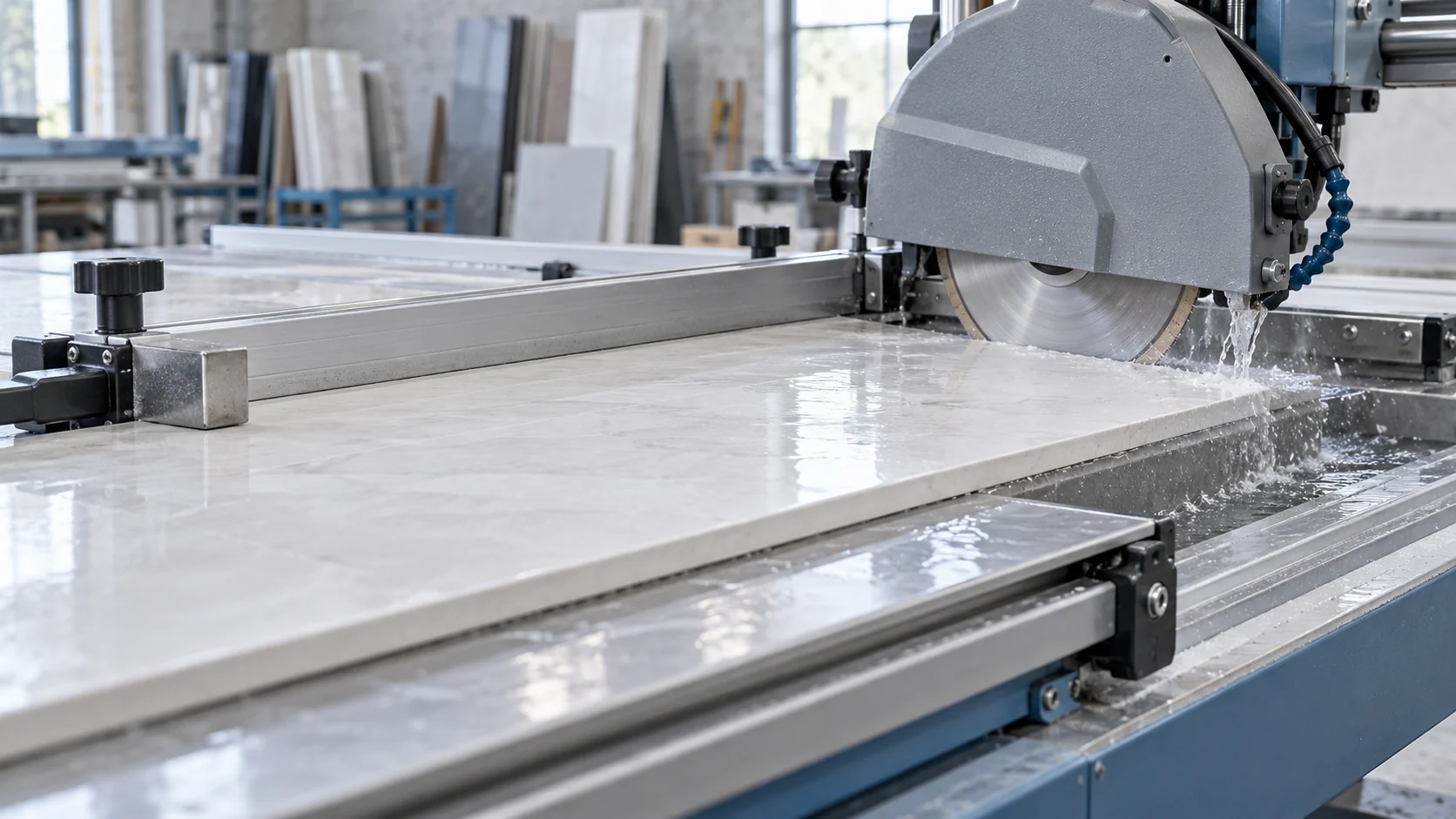
Ceramic & Porcelain Tile Precision Cutting
Concrete Road Sawing & Floor Grinding Prep
Road sawing, expansion jointing, and multi-stage planetary floor grinding; confirm blade welding process per order.
Recommended Machining Workflow & Tooling Chain
Road Sawing / Edge Profiling
Concrete Road Blade QZ-SB-CC01
Note: Match segment bond to concrete cure age (green vs cured)
Initial Floor Opening & Leveling
QZ-18 Grinding Shoes (16#-30#)
Note: Test concrete hardness with Mohs scratch picks before selecting bond
Transition Scratch Refining
QZ-20 Transition Discs (50#-100#)
Note: Grind in perpendicular cross-hatch passes to erase gouges
Edge & Corner Flush Finishing
QZ-CW-01 Balanced Turbo Cup Wheel (Angle Grinder)
Note: Glide smoothly along perimeter walls to avoid deep localized pits
Common Field Failures, Root Causes & Remedies
Abrasive slurry generated from fresh concrete aggregate severely erodes the raw steel core beneath the segment.
Consider a concrete blade with protective segments (QZ-SB-CC01); confirm segment geometry and welding process against the order drawing and technical data.
Using Medium or Hard bond shoes on hard concrete. The dense surface cannot abrade the metal bond, so diamonds glaze.
Trial available QZ-18 bond and grit variants on a small area. Check floor condition, machine pressure, and removal target, then select from cutting, wear, and scratch results.
Operating Checklist to Confirm Before Ordering
To help match the tool to the job, prepare the following parameters:
- Concrete grade & condition (Green concrete / Standard C30 / Hard troweled / Densified)
- Grinder model (machine weight, head pressure, planetary configuration)
- Dry grinding with vacuum extractor or wet grinding with slurry collection
- Final profile specification (CSP 2-3 for epoxy bonding, exposed aggregate, or polished sheen)
Matched Products in This Solution
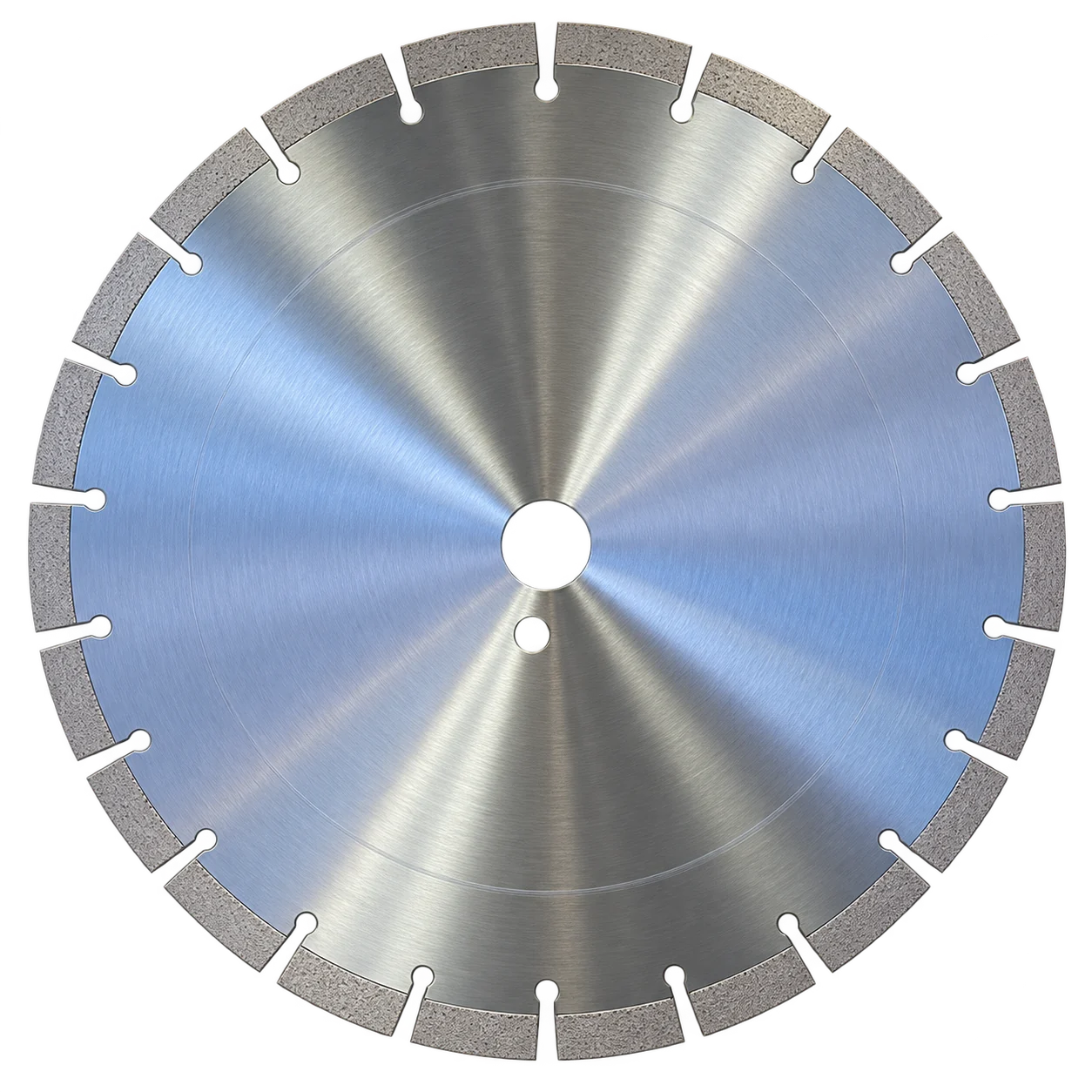
Diamond Blade For Concrete & Reinforced Concrete
Candidate for concrete and reinforced-concrete cutting; verify cutting rate and wear for the aggregate, rebar, and machine conditions.
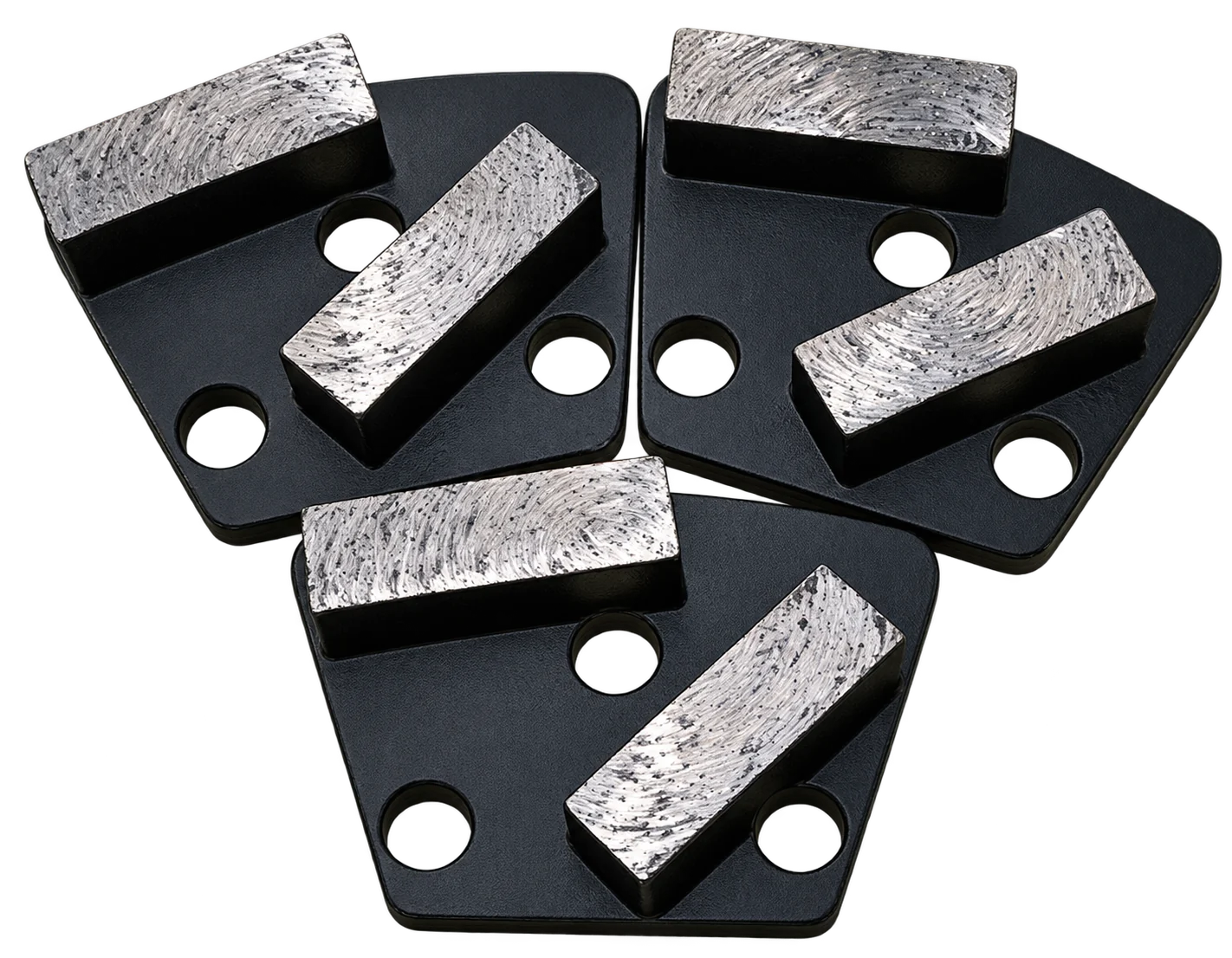
Concrete Diamond Grinding Pad (Model QZ-18)
Catalog model QZ-18. More aggressive, better for chip removal, mainly used for grinding concrete floors.
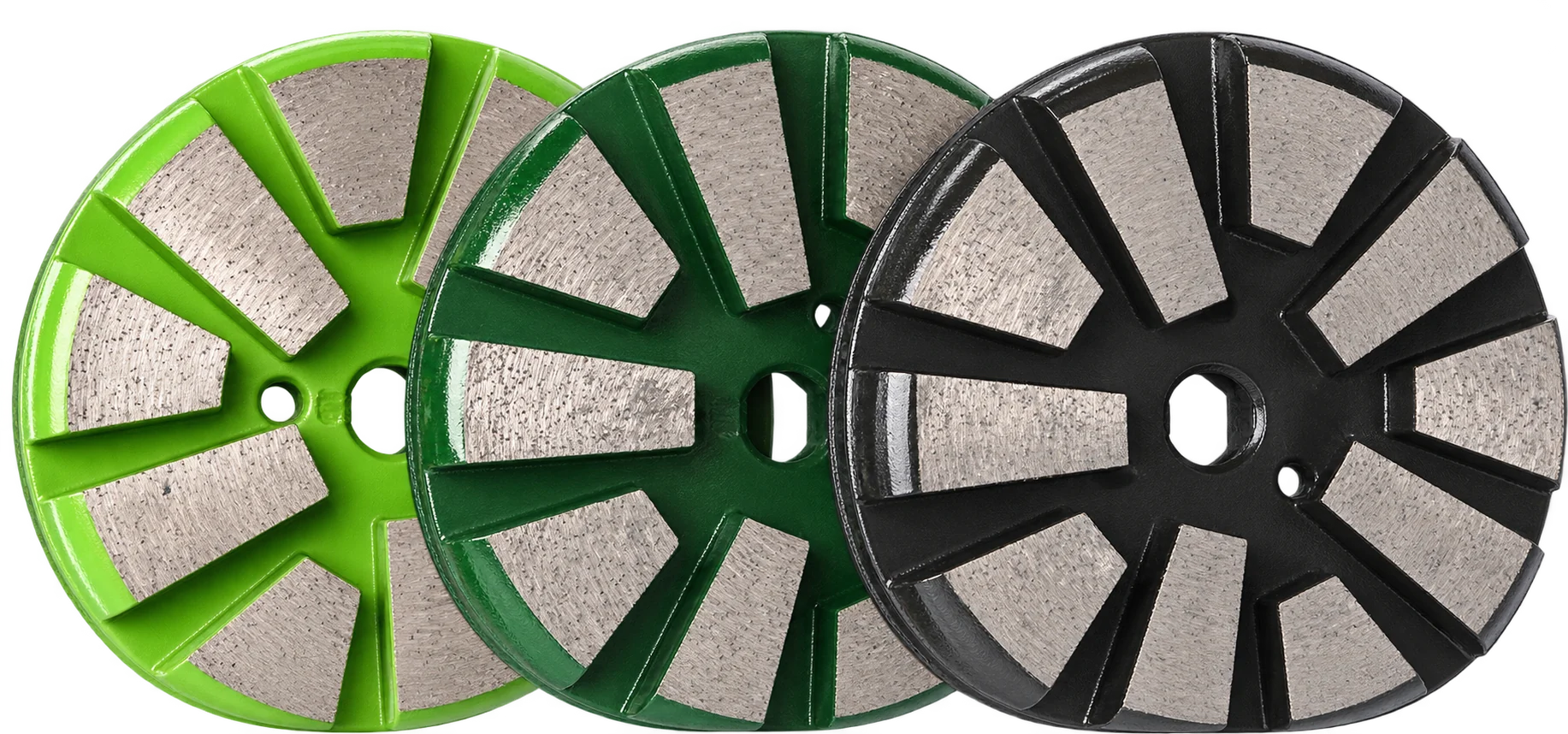
Metal Bonded Floor Polishing Pad (Model QZ-20)
Catalog model QZ-20. Unique segment structure and formula make it aggressive. Mainly used for wet grinding of concrete floors.
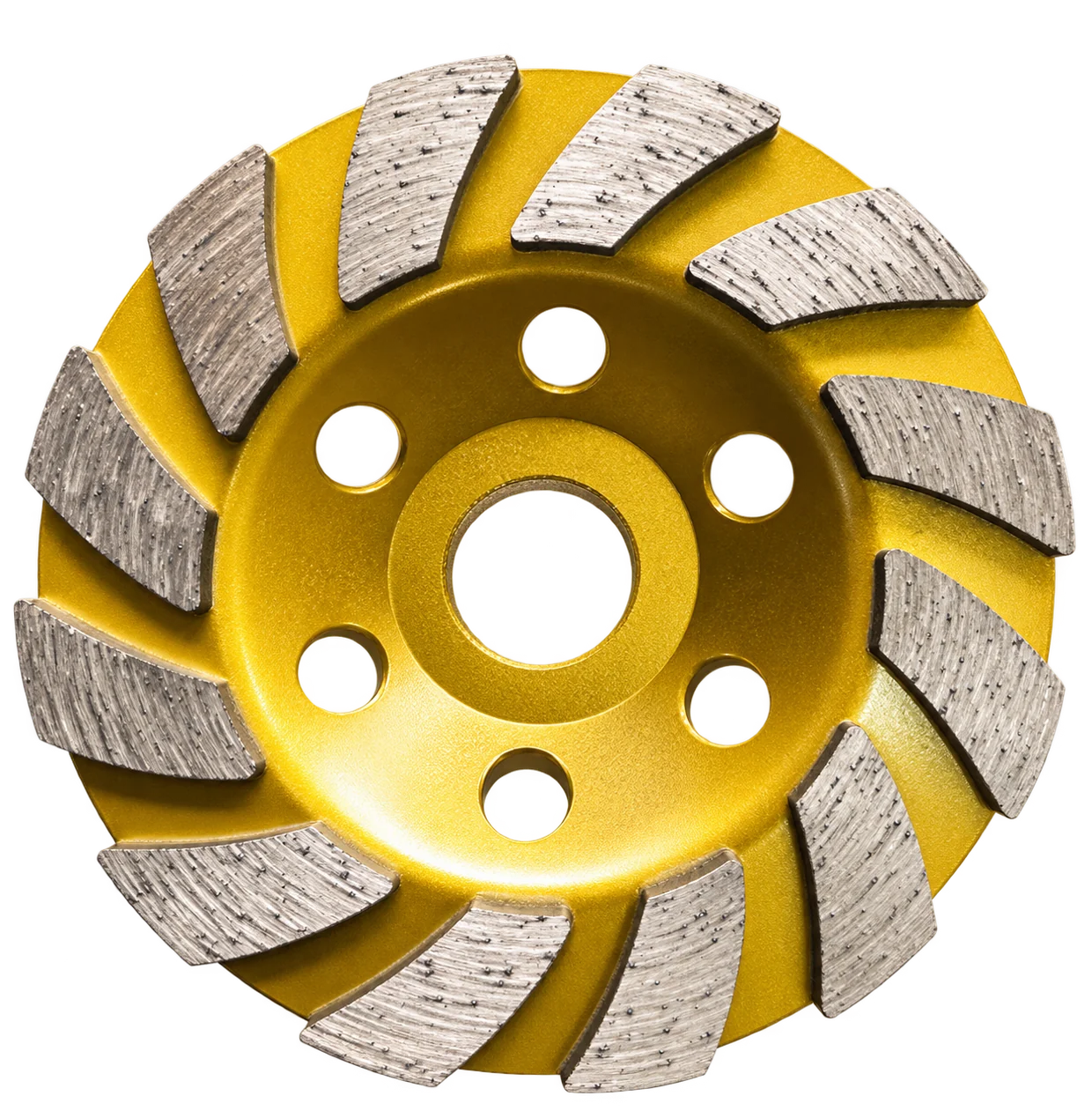
Diamond Cup Wheel (Turbo & Double Row)
Application: Granite, Concrete, Field Stone. Sizes 100mm to 230mm with M14 or 22.23mm arbor.
Common Machining Bottlenecks & Engineered Remedies
Targeting real-world cutting and grinding challenges: edge chipping, floor tool glazing, block saw stalling, and OEM supply chain bottlenecks.
Edge Chipping & Corner Blowout on Sintered Stone Mitering
Micro-chipping and serrated spalling along cutlines or jagged 45° miter joints, causing high-value countertop slab rejections or tedious manual repairs.
Chipping may depend on the slab, blade condition, support, spindle runout, cooling, or feed. Record the defect location and check each factor.
- Check tool-marked maximum RPM and machine limits; record current peripheral speed
- Record straight and miter feed, then adjust in a trial against slab and machine guidance
- Inspect entry and exit chipping; adjust support and feed as needed
- Confirm coolant reaches the blade and workpiece contact zone
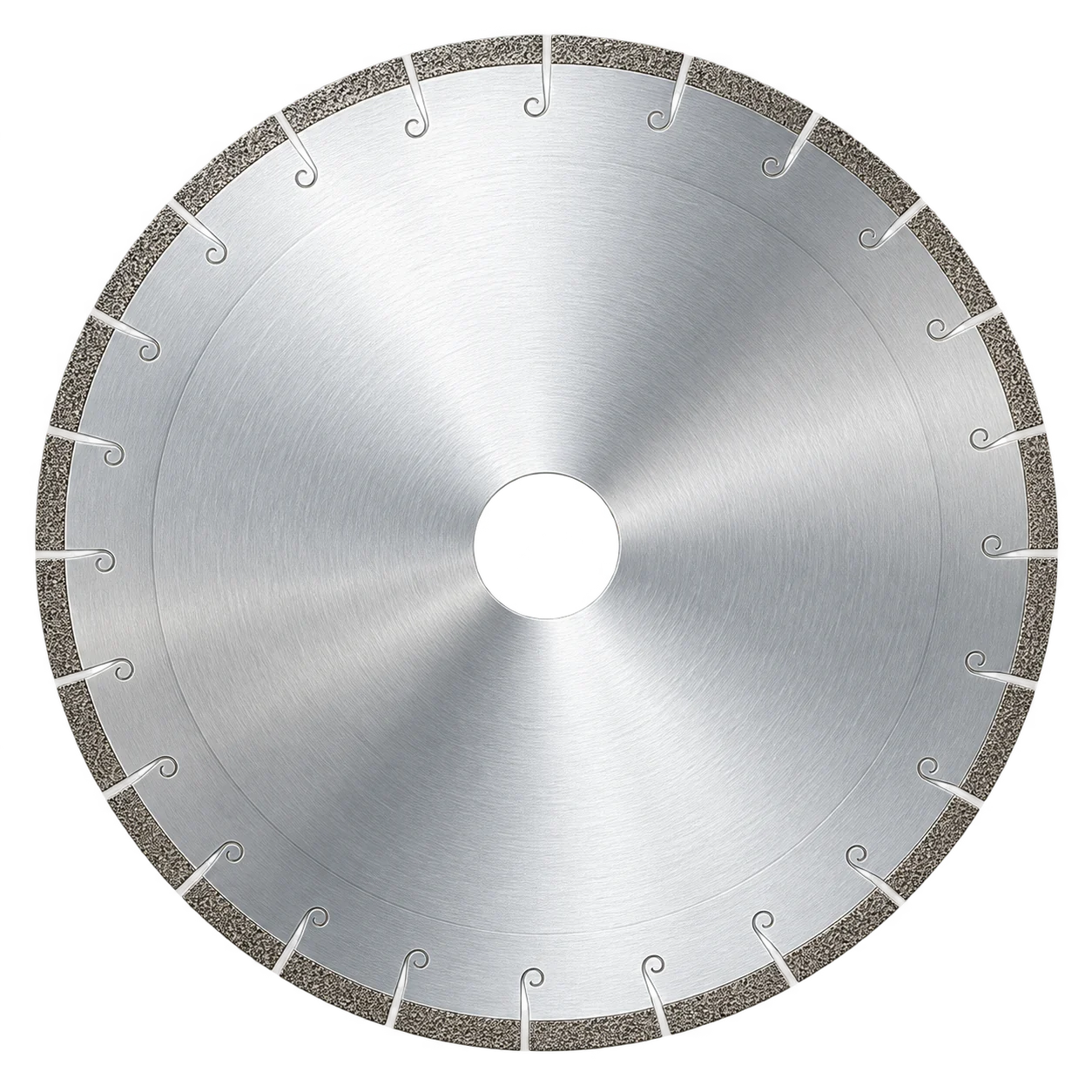
Diamond Blade For Dekton & Sintered Stone (J-Slot Silent)
Thin-segment blade listed for 3–20mm slabs; verify edge quality and wear in a trial cut on the target material.
Share your slab thickness, machine spindle RPM and power. We will review peripheral speeds and match trial specifications.